Last Updated on December 12, 2025 by teamobn
When you think of a balcony, you probably imagine a platform outside a wall with a door, a railing, and space for plants or a chair. You do not usually think of a balcony and a window as the same thing.
A window balcony, also called a balcony window, changes that idea. It is a special window that can unfold or slide out to create a small balcony with railings. Instead of building a full concrete or steel balcony, you install a window system that turns an ordinary opening into a safe standing space.
Window balconies are popular in small apartments, attic rooms, and older buildings where space is tight or where adding a full balcony would be too hard or too expensive. They give you more light, fresh air, and a place to stand outside without major structural work.
Key Takeaways
- A window balcony is a window that unfolds or slides out to create a small balcony with railings.
- It is ideal for small homes, apartments, and attic rooms where a full balcony is not practical.
- There are two main types. Vertical wall systems, such as Bloomframe and roof window balconies from companies like Fakro and Velux.
- You will usually need a structural check, possible permits, and a professional installer.
- Good window balconies include strong railings, clear load rating information, and weather-resistant materials.
What Is A Window Balcony Or Balcony Window
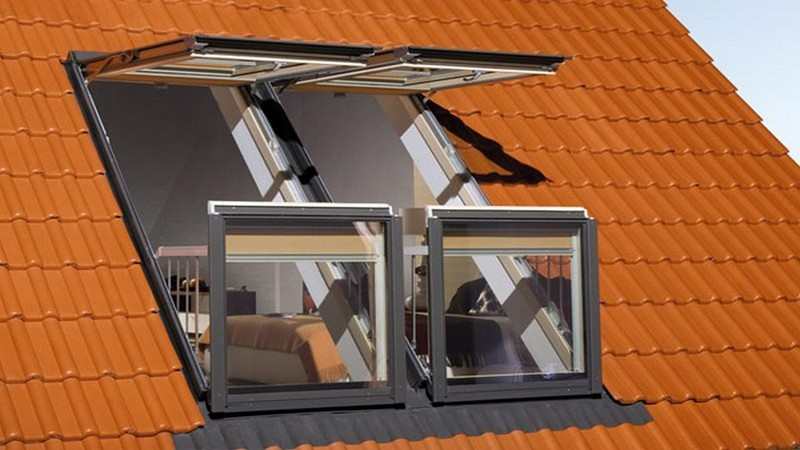
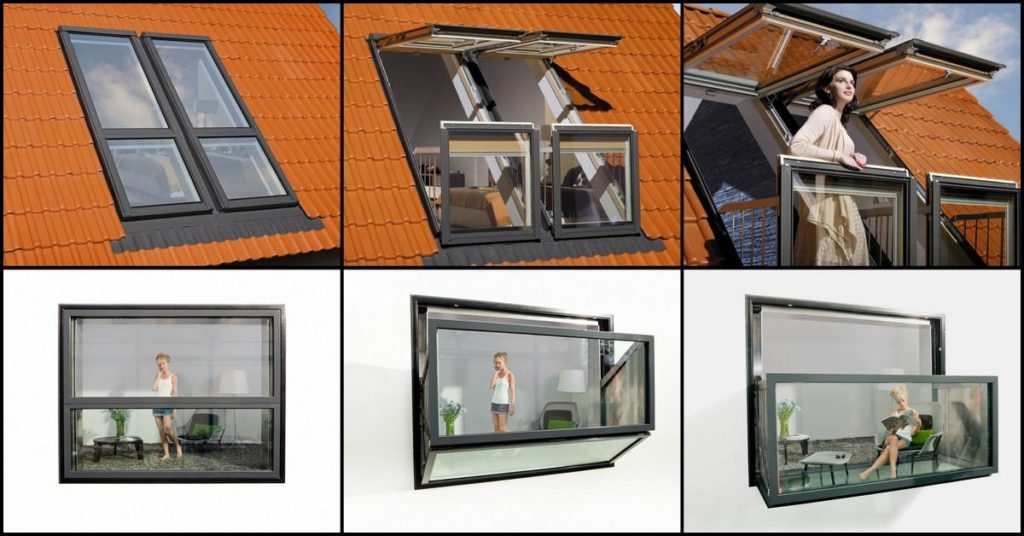
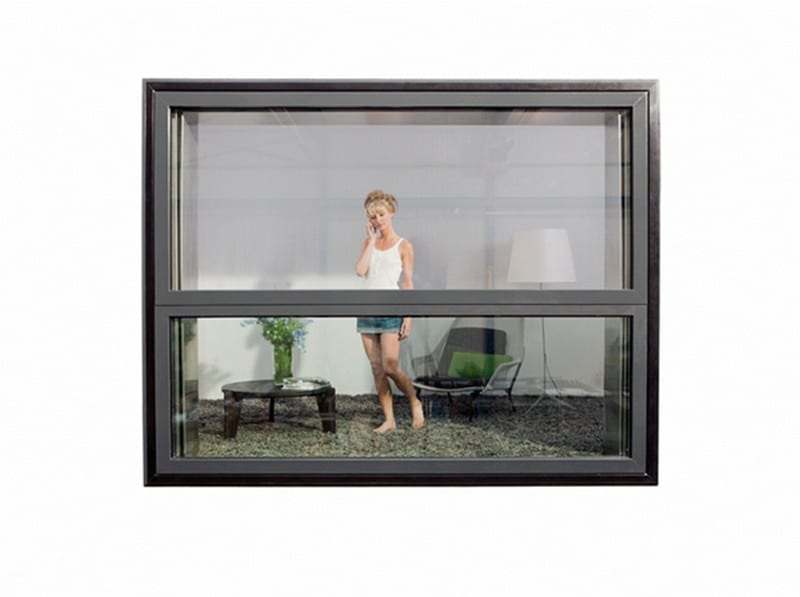
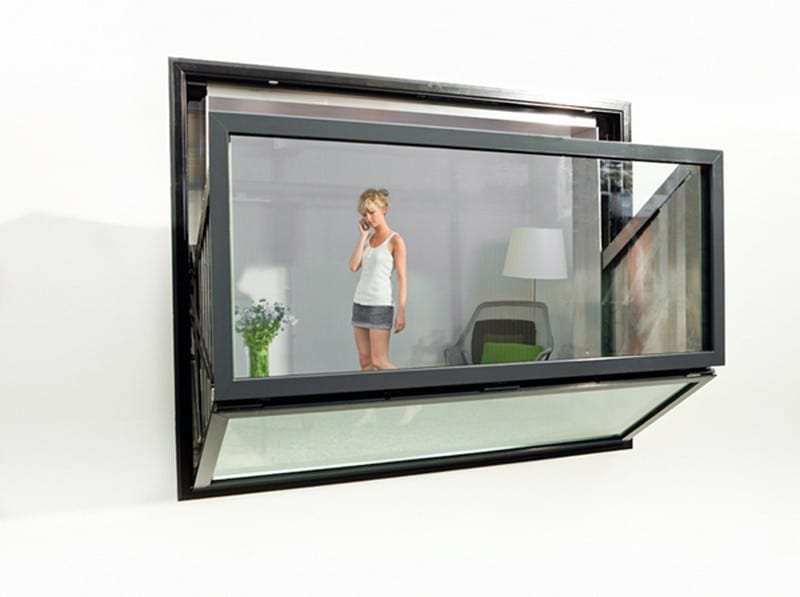
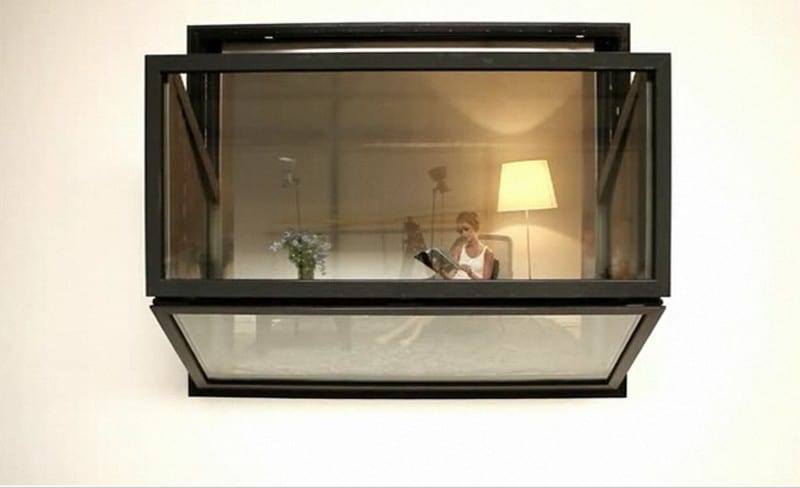
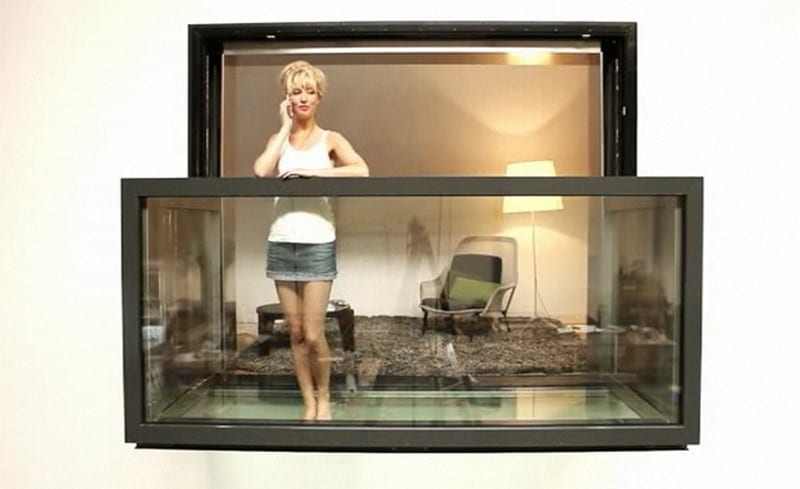
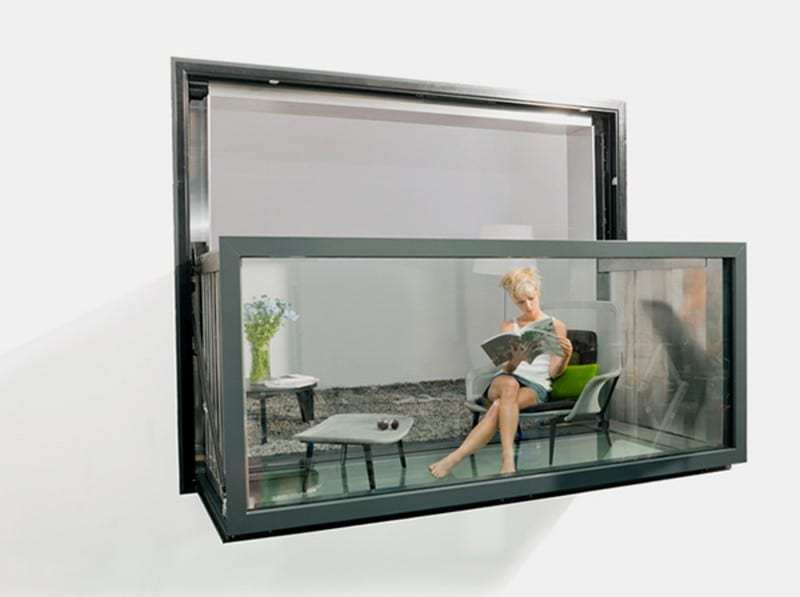
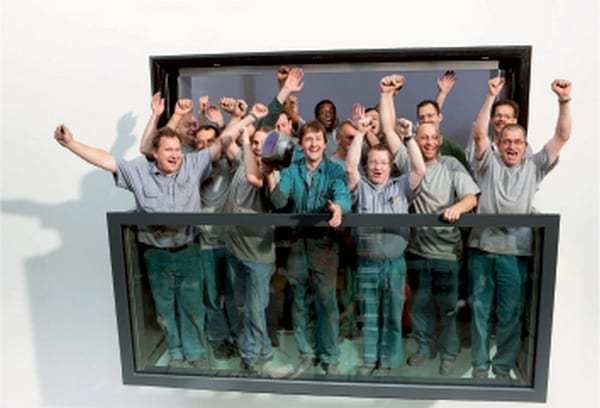
A window balcony is a hybrid between a window and a balcony. In its closed position it looks similar to a large window. When you open it, parts of the frame move outward and downward to form a small balcony floor and railings.
Key points:
- It uses the space of a window opening to create a small outdoor area.
- It usually provides enough room to stand comfortably and maybe place a small stool or plant.
- It adds light and fresh air without the same level of structural work needed for a traditional balcony.
For many homeowners or tenants, this is a smart way to get the feeling of a balcony in a building that was not designed for one.
Smart Window Balconies
There are many residential buildings around the world in desperate need of a balcony. Think of warehouse conversions, older apartment blocks, and narrow city houses. In these places, a full balcony is often not allowed or not possible.
Window balconies answer this problem. They are especially useful because most people only use a traditional balcony part of the time. With a window balcony you can enjoy the extra space when you need it, and keep a clean facade and full window when you do not.
On this page, we look at three well-known solutions. Bloomframe, Fakro, and Velux.
Types Of Window Balconies
Vertical Wall Systems Bloomframe Style
Bloomframe® is one of the most famous vertical wall window balconies. It fits into a standard wall opening where a large window or door would typically be located.
- In the closed position, it looks like a large modern window.
- At the press of a button, the lower part folds outward to become the floor.
- The upper part stays upright to form the front rail, and the side parts provide extra safety.
Bloomframe is designed for apartment buildings and houses where a standard balcony is not possible. It offers more sunlight, fresh air, and a place to step out. All that is needed is a suitable wall opening and enough structural support.
We first came across Bloomframe many years ago. It won several design awards, but it took time to reach the market. More recently, French manufacturer Kawneer has been involved in development and production.
Bloomframe has some important built-in safety features:
- The system is guaranteed against collapsing during opening and closing.
- The fully open position is limited mechanically to keep users safe.
- The powered and mechanical movement makes opening and closing simple for almost everyone.

Roof Window Balconies Fakro And Velux
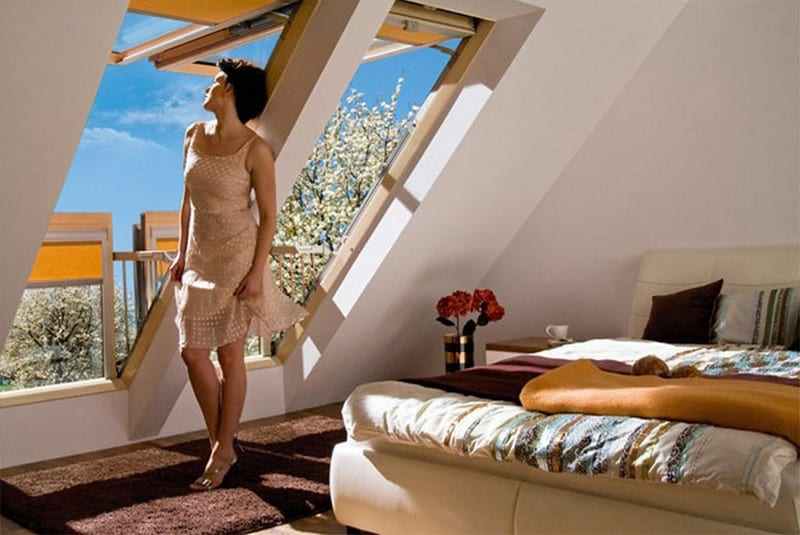
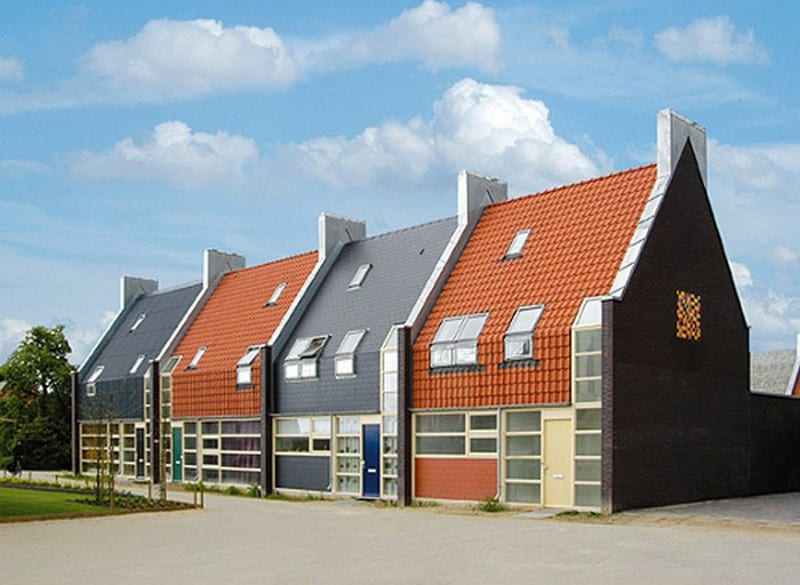
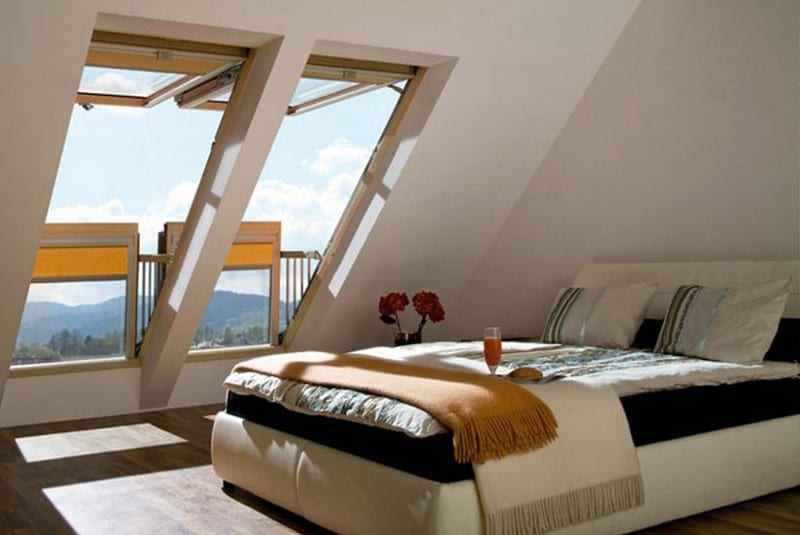
An upstairs balcony is a lovely feature, but adding one to an existing house is usually a major project. That is where Fakro and Velux roof window balconies come in.
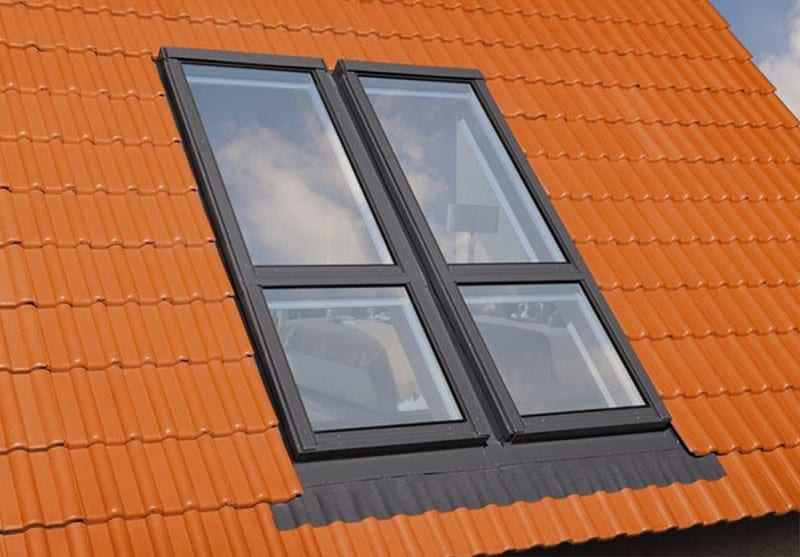
These systems are designed for sloping roofs, such as attic rooms or loft conversions.
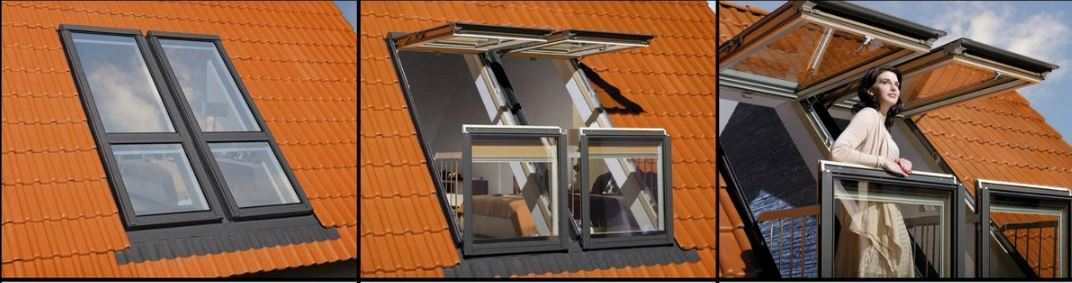
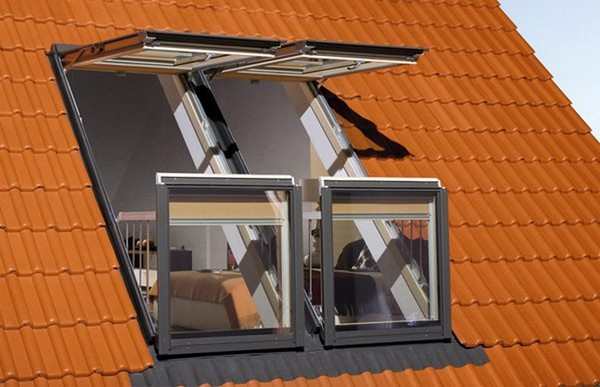
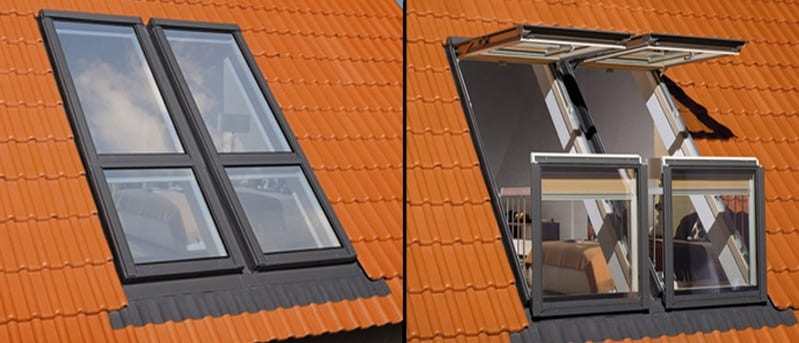
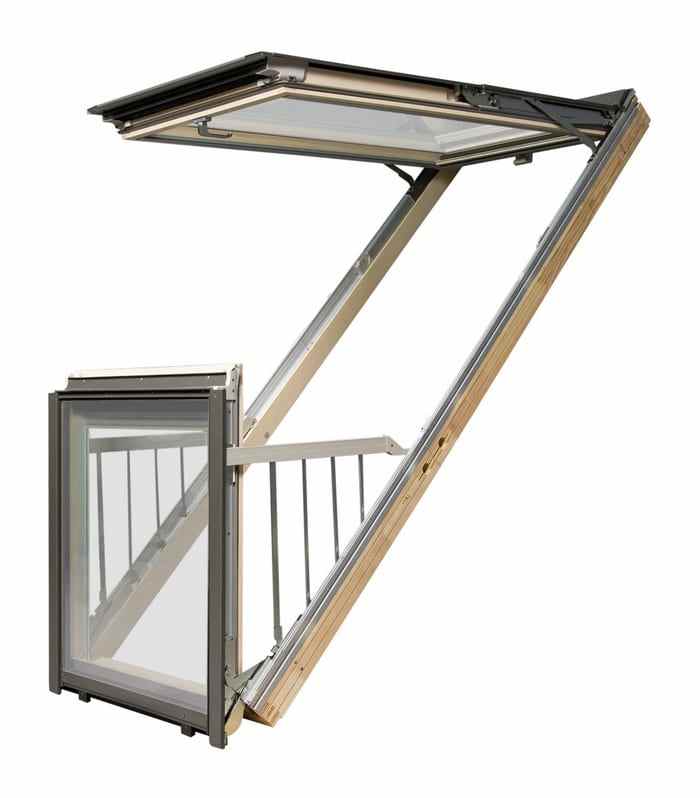
- The window is divided into an upper and a lower sash.
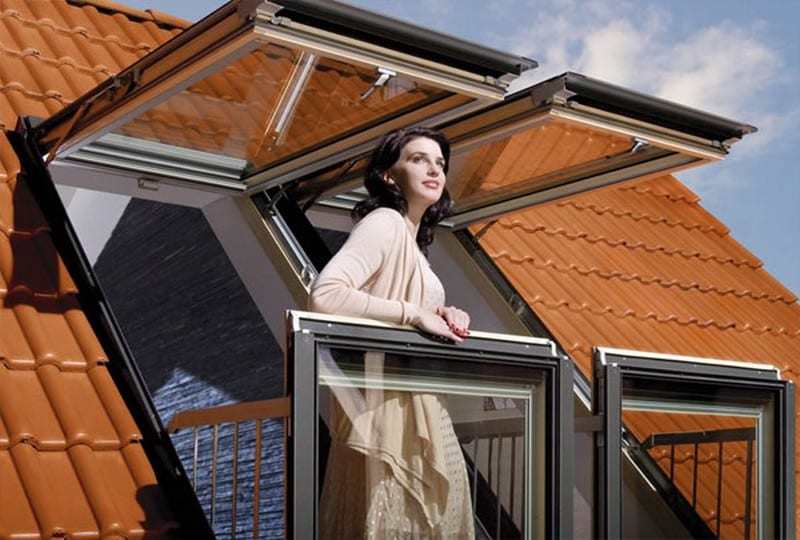
- The upper sash opens upward to about a 45-degree angle and becomes a small roof.
- The lower sash opens forward to become the front wall of the balcony.
- Railings slide out from the sides as you open the window and hide away again when it is closed.
From the inside, it feels like you have turned an attic window into a tiny open air balcony. This can radically change how an attic bedroom, studio, or home office feels. What was once a dark and cramped room can become bright, airy, and far more enjoyable.
Click on any image to start the lightbox display. Use your Esc key to close the lightbox. You can also view the images as a slideshow if you prefer 






Pros And Cons Of Window Balconies
| Pros | Cons |
|---|---|
| Great for small spaces Perfect for narrow facades, small apartments, and attic rooms where a full balcony will not fit. | Higher cost than standard windows The hardware, glass, and installation are more complex than a normal window, so prices are higher. |
| Lets in more light and air A window balcony has a larger opening than a typical window so that it can bring in more daylight and fresh air. | Weather limits use You will enjoy it most during mild seasons. In very hot, cold, or windy climates, you may open it less often. |
| Less structural work than a full balcony Many systems fit within an existing wall or roof opening. This can reduce the amount of concrete or steel work. | Limited floor space Most window balconies are designed for standing and perhaps a small stool, not for larger furniture. |
| Improves how a room feels A small attic or city apartment can suddenly feel more open and higher value. | Let’s in more light and air A window balcony has a larger opening than a typical window, so it can bring in more daylight and fresh air. |
| Stylish and modern look Window balconies can become a design feature that sets a home apart. |
Basic Technical Specifications Explained Simply
Exact specifications vary by brand and model, but most window balconies share some common features. Here is what homeowners should know in plain language.
Typical Dimensions And Load Capacity
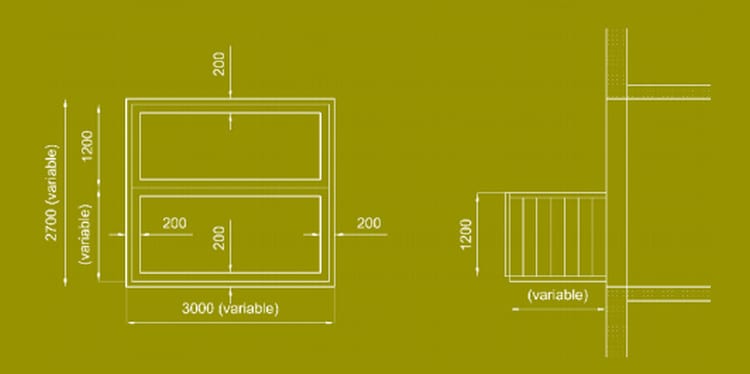
- Many window balconies are around 2.5 to 3 meters wide and 0.8 to 1.2 meters deep.
- The load capacity tells you how much weight the balcony can safely hold.
- A common rating is around 350 kg, which is roughly 770 lbs. In practice, that usually means two or three adults plus light furniture.
- Always check the exact numbers in the product documentation and follow them strictly.
Materials
- Frames and railings are often made from powder-coated aluminum or reinforced steel. These metals are strong and resist rust and weather.
- The balcony floor may be high-grade timber, composite decking, or anti-slip tiles. The goal is to be safe to walk on and easy to maintain.
- Glazing is usually double or triple-glazed safety glass, which helps with insulation and breaks in a controlled way if damaged.
Opening Mechanism
Window balconies can be manual or automated.
- Automated systems
Use electric motors controlled by a switch or remote. They are smooth and convenient but rely on power. - Manual systems
Use counterweights or gas struts. Some use a hand-operated crank. These do not depend on electricity and can be simpler to maintain.
Many systems include:
- Safety locks to stop unplanned movements.
- Mechanical limiters that fix the balcony in a stable open position.
- Sensors in automated models that stop the system if something blocks the movement.
Installation Requirements For A Window Balcony
Adding a window balcony is not the same as replacing a normal window. You are changing how loads move through the wall or roof. Safety must come first.
Structural Integrity
Before you order a window balcony, arrange a structural assessment. A qualified structural engineer or experienced builder should check:
- Whether the wall or roof can carry the extra load.
- Whether the existing opening can be used or needs to be enlarged.
- Whether extra steel or timber reinforcement is required.
Do not skip this step. A poor installation can damage the building and put people at risk.
Window Type And Compatibility
Different systems suit different building types.
- Vertical window balconies, such as Bloomframe, fit into vertical walls.
- Roof balcony windows from Fakro and Velux suit pitched or sloping roofs.
Most need a larger opening than a standard window. This work should be done by a licensed contractor who understands both roofing and structural safety.
Professional Installation Only
A window balcony is not a DIY project.
- The frame must be fixed securely to the structure.
- All moving parts must line up correctly.
- Waterproofing around the frame must be done carefully to prevent leaks.
- Any electrical work for powered models must meet local standards.
Use an installer who has experience with the specific brand you choose. This also helps protect your warranty.
Permits And Regulations
Rules vary by country and local council, but many areas treat window balconies similarly to regular balconies or major facade changes.
You may need:
- Building permits or planning approvals.
- Sign off from a structural engineer.
- Permission from a body corporate or homeowners association for apartments.
Always check your local building authority or council website, and when in doubt, ask a qualified professional.
Maintenance
Most window balconies do not need complex maintenance, but regular checks are important.
Once or twice a year:
- Inspect moving parts, locks, and hinges.
- Look for signs of rust, cracks, or water leaks.
- Clean drains or channels around the frame.
- Test that the opening mechanism moves smoothly and stops correctly.
Follow the manufacturer’s maintenance guide and arrange repairs quickly if you spot a problem.
Safety Features And Durability
Because window balconies sit high above the ground, safety is critical. Good products are designed and tested to meet strict standards.
Common Safety Features
- Built-in locks and barriers
Locks hold the balcony securely in both the closed and open positions. This prevents sudden movements and keeps the unit stable while in use. - Railing design
Railings are usually steel or aluminum and must resist a strong horizontal force. The height and spacing follow building codes to stop people from falling through, especially children. - Automated safety sensors
In powered models, sensors stop the balcony from moving if something blocks the path. This can prevent accidents and damage to the system. - Tested load rating
Each model is tested to hold more weight than normal use. You should still respect the stated maximum load and avoid overloading.
Durability
Good window balconies are built to last.
- Weather resistant materials
Aluminum, stainless steel, treated timber, and quality glass all stand up well to sun, rain, and wind when properly maintained. - Protective coatings
Powder coating or other finishes protect the metal from rust and fading. Many floors have anti slip surfaces that also resist wear. - Quality manufacturing and warranty
Reputable brands such as Bloomframe, Fakro, and Velux follow strict quality control processes. They typically offer warranties that cover defects in materials and workmanship for several years.
Even with a strong design, regular cleaning and basic care will extend the life of your balcony window.
If you’re considering an attic conversion, you’ll definitely want to look at our Australian Hardwood Floors…
Is A Window Balcony Right For Your Home
A window balcony is not the answer for every home, but it can be a brilliant upgrade in the right setting.
It may be a good choice if:
- You have a small apartment or narrow facade with no space for a full balcony.
- You are planning an attic or loft conversion and want more light and fresh air.
- Your local rules make a standard balcony too complicated or slow to approve.
- You value design and enjoy modern, flexible solutions.
It may not suit you if:
- You want a large outdoor area for dining or bigger furniture.
- You live in a very harsh climate where you rarely open windows.
- Your budget is very limited and even a high quality window is a stretch.
In many cases, a quick chat with a designer, architect, or experienced builder can help you decide if a window balcony is practical for your building.
Final Thoughts
Window balconies offer a smart, modern way to add outdoor space, light, and fresh air to small homes, apartments, or attic rooms without the hassle of a full balcony build. With options like Bloomframe for walls and Fakro or Velux for roofs, plus strong safety features and simple maintenance, they can transform how you enjoy your living space.
Ready to explore window balconies for your home? Get a free quote from a local installer today or share this guide with a friend planning a renovation.
Frequently Asked Questions About Window Balconies
- What is a window balcony?
A special window that unfolds into a small balcony with railings for light, air, and views. - Can you add one to an existing apartment?
Yes, with a structural check, permits, and professional installation. - Are window balconies safe?
Yes, with strong railings, locks, tested load ratings, and safety sensors. - Do I need a permit?
Often yes. Check local building authority and body corporate rules. - How much do they cost?
More than standard windows, less than full balconies. Get local quotes. - Window balcony vs normal balcony?
Window balcony transforms from a window; a normal balcony is permanent. - Can I install it myself?
No. Must be done by professionals for safety and structure.