Last Updated on December 1, 2025 by teamobn
Tall perennial flowers are one of the easiest ways to add height, color, and structure to a garden. Because they come back year after year, they give you long-lasting beauty without replanting every season. Many of them also attract bees, butterflies, and hummingbirds, making your garden more alive and productive.
This guide looks at ten of the best tall perennial flowers, how tall they grow, what conditions they need, and how to care for them so they keep blooming for years.
Quick Answer: Best Tall Perennial Flowers for Home Gardens
Contents
If you just want the list, here are ten excellent tall perennials and their basic needs:
- Delphinium – 4–8 ft tall; full sun; rich, moist, well-drained soil; cool to mild climates
- Hollyhock – 5–8 ft tall; full sun; fertile, well-drained soil; sheltered from strong winds
- Joe-Pye Weed – 4–7 ft tall; full sun to part shade; consistently moist soil; great for wet spots
- Russian Sage – 3–5 ft tall; full sun; dry, well-drained soil; very drought tolerant
- Coneflower (Echinacea) – 2–4 ft tall; full sun; average to dry soil; very hardy and tough
- Cardinal Flower (Lobelia cardinalis) – 2–4 ft tall; part shade; consistently moist or wet soil
- Verbena bonariensis – 3–6 ft tall; full sun; well-drained soil; airy and light in small spaces
- Bee Balm (Monarda) – 2–4 ft tall; sun to part shade; moist soil; strong pollinator magnet
- Black-Eyed Susan (Rudbeckia) – 2–3 ft tall; full sun; average soil; long blooming
- Foxglove (Digitalis) – 2–5+ ft tall; part shade; moist, rich soil; cottage garden favorite
What Are Tall Perennial Flowers?
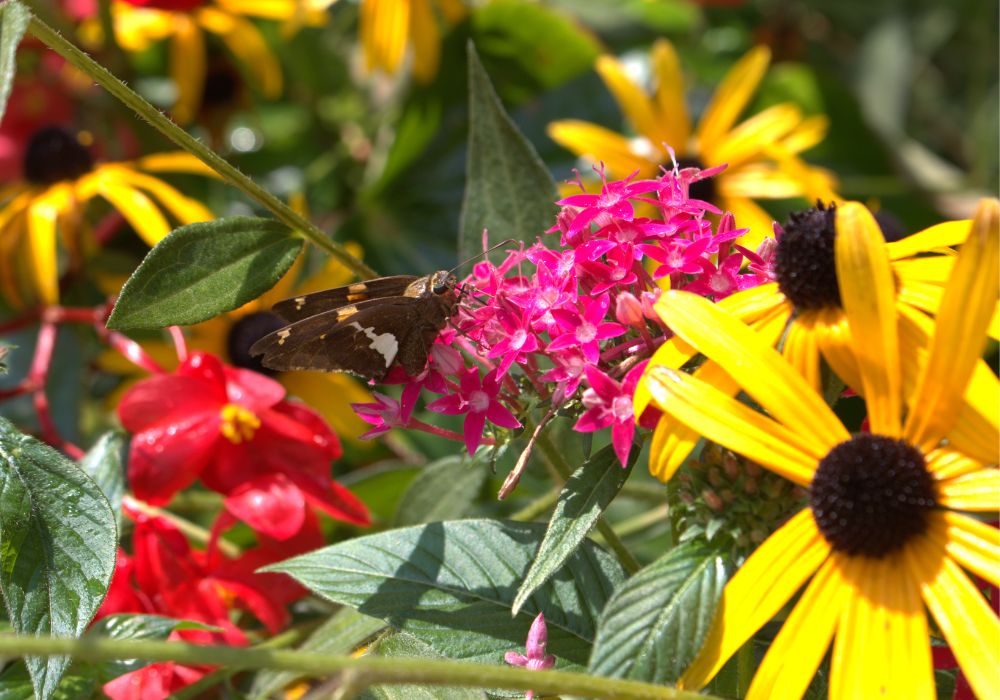
Tall perennial flowers are plants that grow back every year and usually reach heights of about 3 feet or more. They add a vertical layer to your garden that shorter plants cannot provide. Many gardeners use them at the back of a flower bed, along fences, or as focal points that draw the eye.
Unlike annuals, which must be replanted every year, perennials come back from the same roots. Once established, they are often easier to maintain. Tall perennials come in many colors, shapes, and textures, from bold spires to airy clouds of flowers.
Many are also excellent for attracting pollinators and creating a more natural, layered look in the garden.
Top 10 Tall Perennial Flowers For Your Garden
These ten tall perennials offer a mix of color, height, and wildlife value. For each plant, you’ll find a quick summary to help you choose the right one for your space.
Delphinium
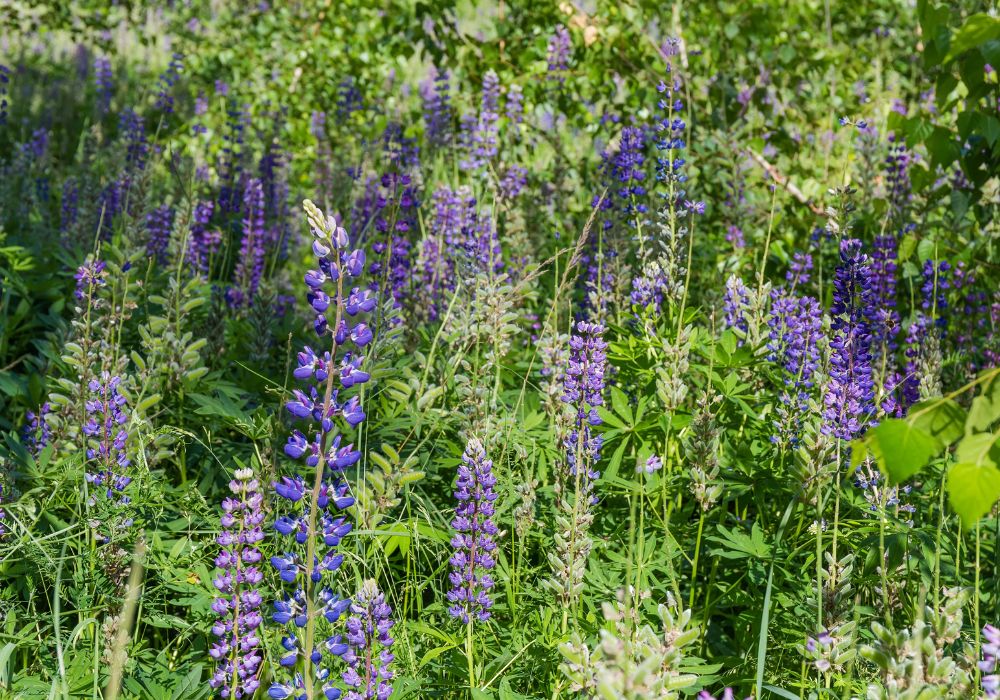
Delphiniums are known for their tall spikes of blue, purple, pink, or white flowers. They look especially striking in cottage-style borders and mixed flower beds. Their strong vertical form makes them ideal for the back of a border or against a fence.
Delphiniums like cool to mild summers, rich soil, and regular watering. In hot climates, they appreciate some light afternoon shade. Because the flower spikes can be heavy, they often require stakes or other support to keep them upright in windy conditions and during rain.
Delphinium at a glance
- Height: 4–6 ft, sometimes up to 8 ft
- USDA zones: About 3–7, depending on variety
- Light: Full sun; light afternoon shade in hot areas
- Soil: Rich, fertile, well-drained; keep evenly moist
- Bloom time: Late spring to early summer; may rebloom if cut back
- Best use: Back of borders, cottage gardens, vertical color
Hollyhock
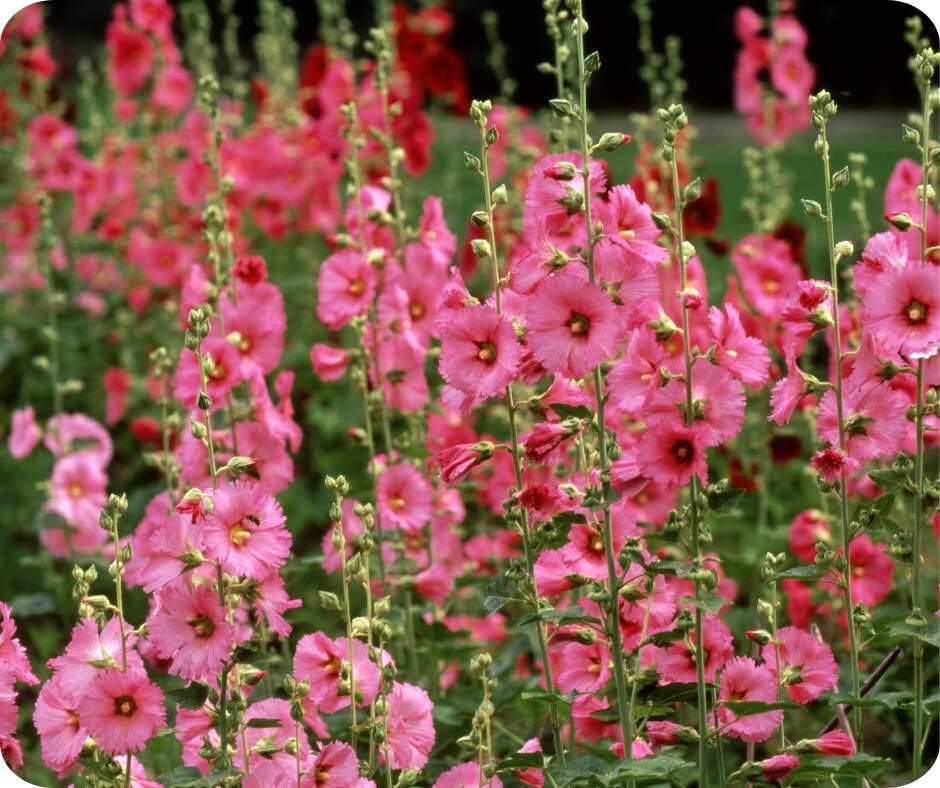
Hollyhocks are classic cottage garden plants. Their tall, sturdy stems are adorned with large, single or double blooms in shades of pink, red, yellow, white, and nearly black. They look beautiful lining fences, walls, and pathways, where they can tower overhead.
Hollyhocks like full sun and rich, well-drained soil. They can reach up to 8 feet tall, so they benefit from staking in windy areas. Many gardeners treat them as short-lived perennials or biennials, but they often reseed and return on their own.
Hollyhock at a glance
- Height: 5–8 ft
- USDA zones: Often 3–9 (varies with type and climate)
- Light: Full sun
- Soil: Fertile, well-drained; appreciates compost
- Bloom time: Mid to late summer
- Best use: Cottage gardens, along fences and walls, vertical screens
Joe-Pye Weed
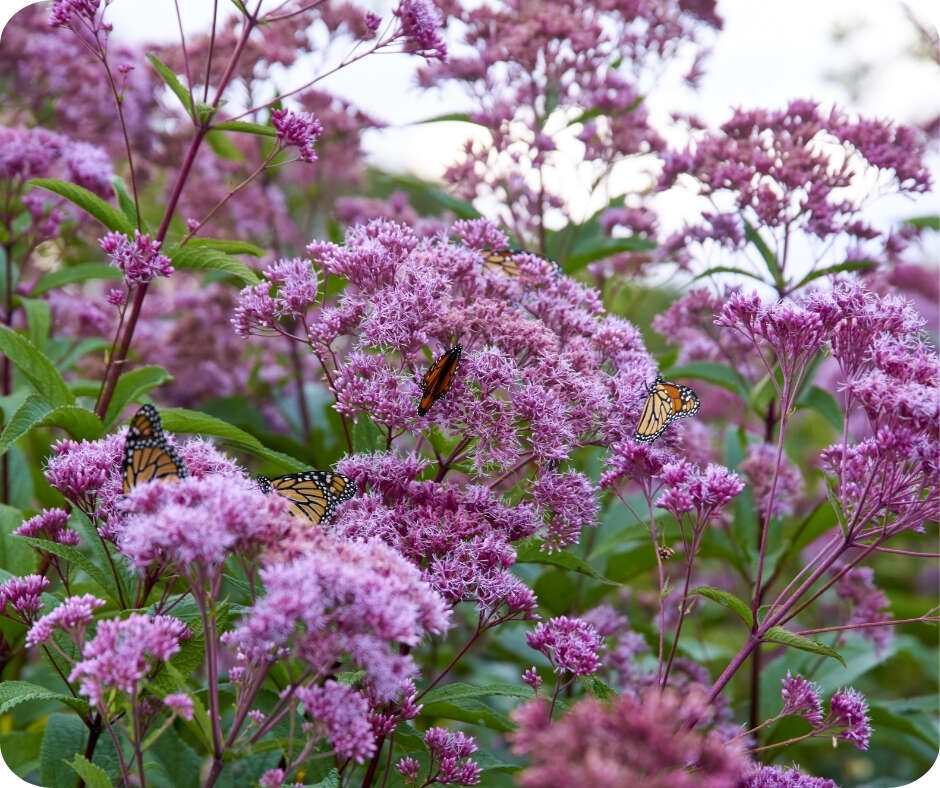
Joe-Pye Weed is a tall native perennial with large, fluffy clusters of pink or purplish flowers. It is a magnet for butterflies and other pollinators and looks especially good in naturalistic, meadow-style plantings.
This plant prefers moist to wet soils and can handle light shade, making it perfect for low or damp areas. Its size and bold flower heads give strong structure to the garden from mid to late summer into early fall.
Joe-Pye Weed at a glance
- Height: 4–7 ft
- USDA zones: Around 4–9
- Light: Full sun to part shade
- Soil: Moist, rich soil; can handle occasional wet conditions
- Bloom time: Late summer to early fall
- Best use: Rain gardens, pond edges, back of borders, pollinator gardens
Russian Sage
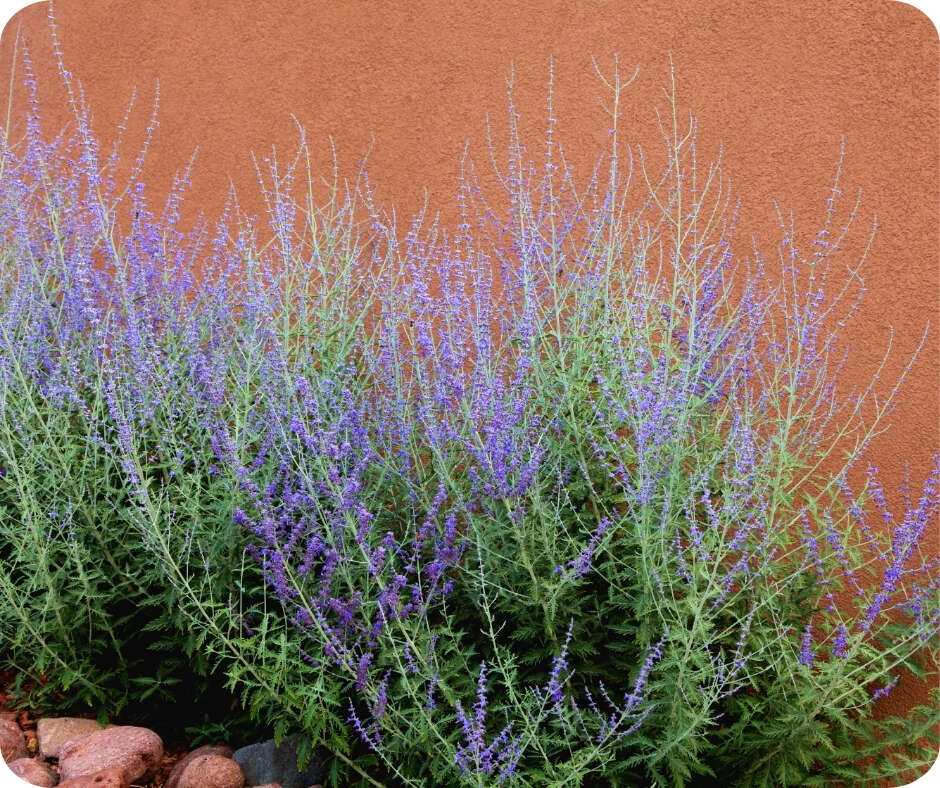
Russian Sage is a tall, airy plant with silvery stems and small lavender-blue flowers. It creates a light, hazy effect that blends well with many other plants. The foliage is fragrant when brushed or crushed.
This plant thrives in hot, sunny, dry conditions and poor soil, making it a great choice for low-maintenance or drought-prone gardens. Once established, it needs very little water and rarely suffers from pests or diseases.
Russian Sage at a glance
• Height: 3–5 ft
• USDA zones: About 4–9
• Light: Full sun
• Soil: Well-drained, even poor or gravelly; dislikes soggy soil
• Bloom time: Mid to late summer into fall
• Best use: Dry borders, gravel gardens, mixed perennial beds, mass plantings
Coneflower (Echinacea)
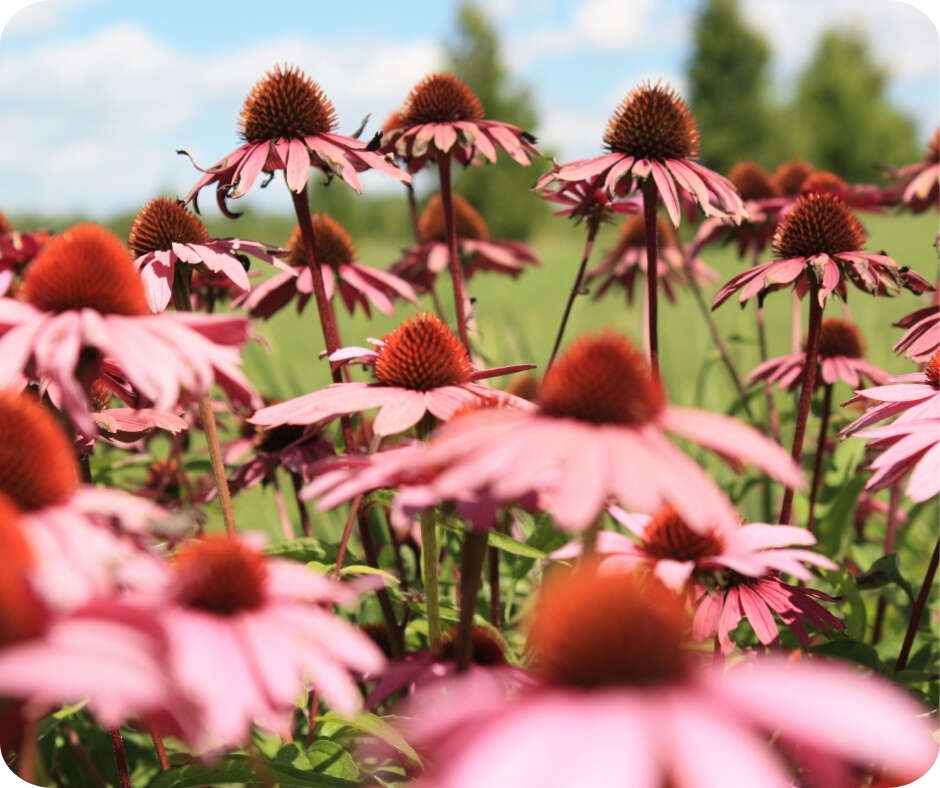
Coneflowers, or Echinacea, are tough, reliable perennials with daisy-like flowers and raised centers. Traditional types are purple or pink, but modern varieties come in white, orange, yellow, and red. They are well-known for attracting bees and butterflies and later feeding birds with their seed heads.
Coneflowers handle heat, drought, and poor soil better than many plants. They are an excellent choice for busy gardeners who want color without a lot of extra work.
Coneflower at a glance
- Height: 2–4 ft
- USDA zones: Around 3–9
- Light: Full sun
- Soil: Average to dry, well-drained
- Bloom time: Mid-summer to early fall
- Best use: Pollinator borders, prairie-style plantings, low-maintenance beds
Cardinal Flower (Lobelia cardinalis)
Cardinal Flower has tall spikes of bright red, tubular blooms that are especially attractive to hummingbirds. The intense color makes it stand out in shady or soggy spots.
This plant prefers consistently moist or even wet soil and partial shade. It does not like to dry out, so it works well near ponds, streams, or in rain gardens. In warmer climates, some gardeners treat it as a short-lived perennial but allow it to reseed.
Cardinal Flower at a glance
• Height: 2–4 ft
• USDA zones: About 3–9
• Light: Part shade or morning sun with afternoon shade
• Soil: Moist to wet, rich, well-drained
• Bloom time: Mid to late summer
• Best use: Rain gardens, pond edges, pollinator and hummingbird gardens
Verbena Bonariensis
Verbena bonariensis is a tall, slender perennial with thin stems and small clusters of purple flowers floating at the top. It adds a soft, airy look without blocking views or overwhelming other plants.
This plant is loved by butterflies and works well in both small and large gardens. It reseeds in many climates, gently moving around the garden and filling gaps.
Verbena bonariensis at a glance
- Height: 3–6 ft
- USDA zones: Often 7–11 as a perennial; grown as an annual or self-seeding plant in colder zones
- Light: Full sun
- Soil: Well-drained, average soil
- Bloom time: Summer into fall
- Best use: Informal borders, cottage gardens, mixed with grasses, pollinator beds
Bee Balm (Monarda)
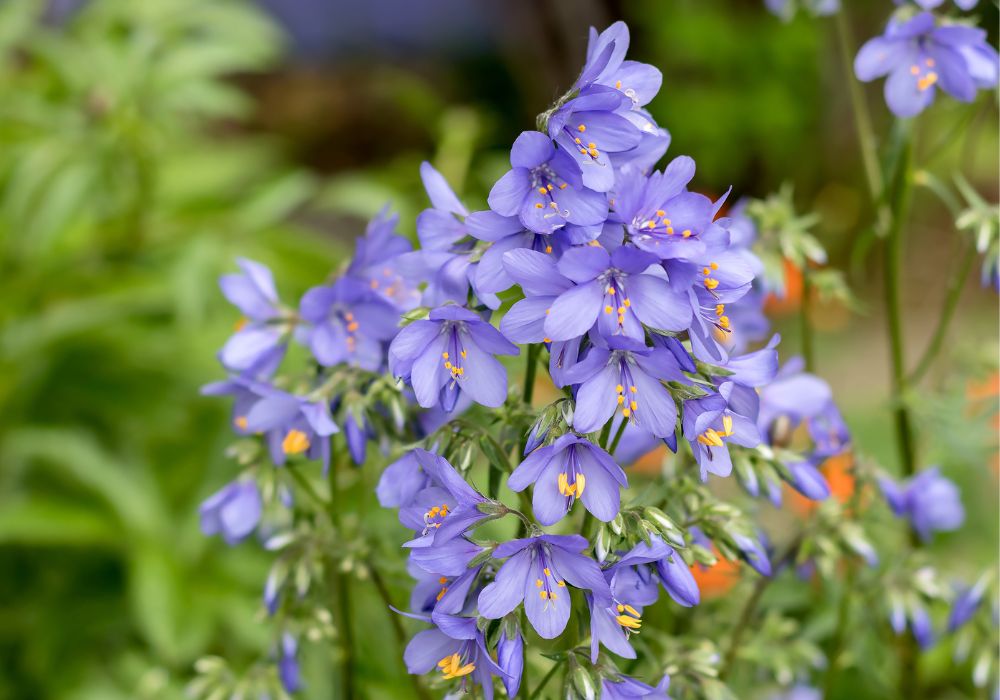
Bee Balm has distinctive, shaggy-looking flowers in red, pink, purple, and white. It gives a strong splash of color and a pleasant, minty fragrance. As its name suggests, it is very popular with bees, and hummingbirds love it as well.
Bee Balm likes moisture and good air circulation. Some varieties can be prone to powdery mildew, so avoid overcrowding and consider choosing newer, disease-resistant types.
Bee Balm at a glance
- Height: 2–4 ft
- USDA zones: Around 4–9
- Light: Full sun to light shade
- Soil: Moist, rich, well-drained
- Bloom time: Mid to late summer
- Best use: Pollinator gardens, mixed borders, near patios where you can enjoy hummingbirds
Black-Eyed Susan (Rudbeckia)
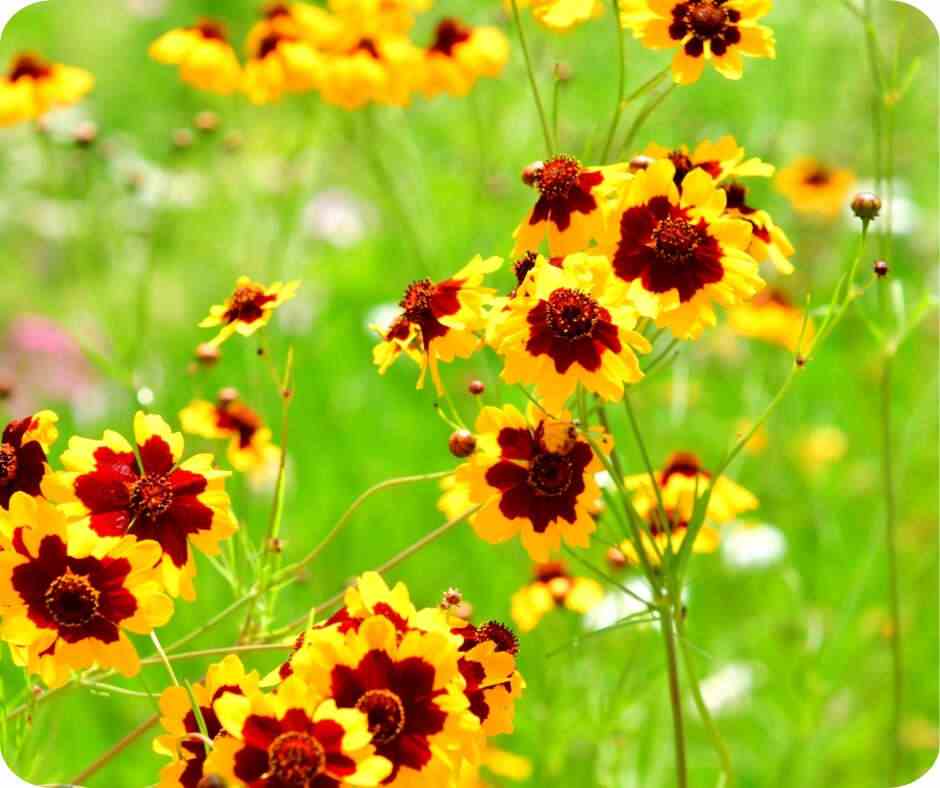
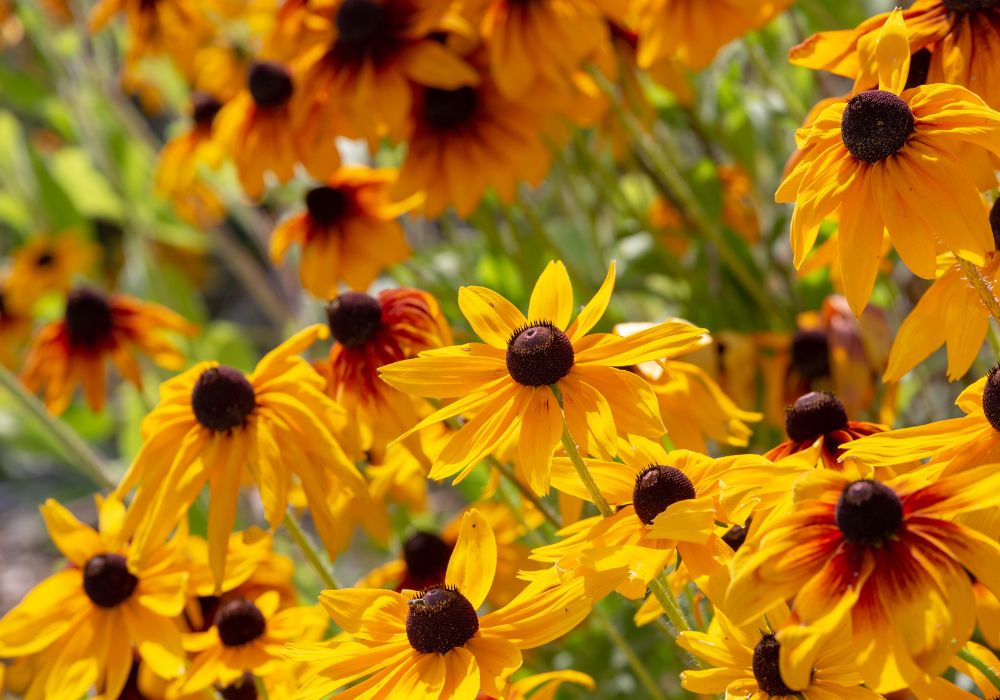
Black-Eyed Susans are cheerful, yellow daisy-like flowers with dark centers. They are easy to grow, bloom for a long time, and are very forgiving of less-than-perfect conditions.
These flowers look great in large groups and work well with ornamental grasses and other prairie-style plants. They attract butterflies and bees and provide seeds for birds later in the season.
Black-Eyed Susan at a glance
- Height: 2–3 ft
- USDA zones: Around 3–9
- Light: Full sun
- Soil: Average, well-drained soil; fairly drought tolerant once established
- Bloom time: Mid-summer to fall
- Best use: Mass plantings, borders, wildlife gardens, prairie-style designs
Foxglove (Digitalis)
Foxgloves produce tall spires of bell-shaped flowers in shades of pink, purple, white, and cream. The inside of the flowers is often speckled, which adds to their charm. They are a classic feature in cottage and woodland gardens.
Many foxgloves are biennial, flowering in their second year and then setting seed, but some species and hybrids behave more like short-lived perennials. They prefer cooler conditions, part shade, and moist soil.
Important: Foxgloves are toxic if eaten by humans or pets. They should be planted where children and animals are not likely to chew on them.
Foxglove at a glance
• Height: 2–5+ ft
• USDA zones: Around 4–9, depending on species and climate
• Light: Part shade or dappled light; some can take full sun in cool climates
• Soil: Moist, rich, well-drained
• Bloom time: Late spring to mid-summer
• Best use: Woodland borders, cottage gardens, shady back-of-the-bed accents
How to Care for Tall Perennial Flowers
Caring for tall perennials does not have to be difficult. With a few simple routines, you can keep them healthy and blooming for many years.
Watering and Moisture Needs
Tall perennials need consistent moisture while they are getting established. After that, water needs depend on the plant type.
Simple watering guide:
- After planting: Water deeply 2–3 times per week for the first few weeks.
- Once established: Water deeply about once a week in normal weather.
- During heat waves or drought: Increase watering to 2–3 times per week, especially for moisture-loving plants like Joe-Pye Weed, Bee Balm, and Cardinal Flower.
- For drought-tolerant perennials like Russian Sage and some Coneflowers: Let the top few inches of soil dry out between waterings to avoid root rot.
Fertilizing for Healthy Growth
Most tall perennials appreciate some extra nutrients, but they do not need heavy feeding.
Basic fertilizing tips:
• In early spring, apply a balanced, slow-release fertilizer or a layer of compost around the base of the plants.
• In poorer soils, add compost in fall or early spring to improve structure and nutrient levels.
• Avoid over-fertilizing, especially with high-nitrogen fertilizers, which can cause lots of foliage but fewer flowers and weaker stems.
Pruning and Deadheading
Regular pruning and deadheading (removing spent flowers) help tall perennials look tidy and bloom longer.
Easy pruning routine:
- In early spring, cut back any dead or damaged stems from last year’s growth.
- During the flowering season, remove faded blooms to encourage more flowers.
- For plants like Delphinium, cut the flower stalks down after the first bloom. This can sometimes trigger a second, smaller flush of flowers.
- Lightly trim plants like Bee Balm after flowering to keep them compact and reduce disease risk.
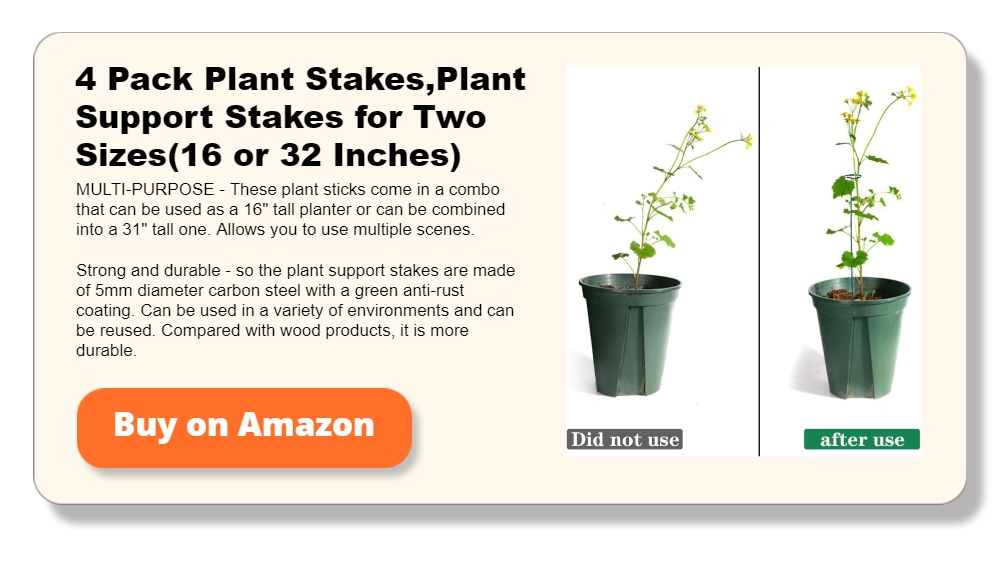
Supporting Tall Plants
Many tall perennials need support to prevent bending or breaking, especially in windy areas or after heavy rain.
Support tips:
• Install stakes, cages, or support rings early in the season, before the plants get tall.
• Tie stems loosely to stakes with soft ties, string, or garden tape so they are held upright but not tightly squeezed.
• Plants that often need support include Delphinium, Hollyhock, and very tall Foxgloves.
Pest and Disease Management
Most tall perennials are fairly tough, but they can still face pests and diseases like aphids, slugs, and powdery mildew.
Prevention and control:
- Space plants so air can move between them. Good airflow reduces fungal diseases.
- Water the soil instead of the leaves when possible, especially in the evening. Wet leaves overnight can encourage mildew.
- Remove dead or diseased leaves and spent stems to reduce disease spread.
- Use organic controls like hand-picking, insecticidal soap, or neem oil if pests become a problem.
- Consider choosing disease-resistant varieties of plants like Bee Balm if mildew has been an issue in your garden.
Preparing Tall Perennials for Winter
Most tall perennials survive winter well, especially once established.
Winter care steps:
- After the first hard frost, cut most perennials down to 2–3 inches above the ground.
- Leave some plants, like Coneflower and Black-Eyed Susan, standing if you want to feed birds and enjoy winter interest.
- Apply a layer of mulch around the base of plants to protect the roots from extreme temperature swings, especially in colder climates.
- In early spring, remove old mulch if it is matted and clear away dead stems to make room for new growth.
Why Are Tall Perennial Flowers Good for Pollinator Gardens?
Tall perennials are excellent choices for pollinator-friendly gardens because they offer food, shelter, and structure over a long season.
Attracting a Range of Pollinators
Different flower shapes and colors attract different pollinators.
• Coneflowers, Bee Balm, and Joe-Pye Weed attract bees and butterflies.
• Cardinal Flower, with its bright red tubes, is a favorite of hummingbirds.
• Verbena bonariensis and Black-Eyed Susan draw in butterflies and bees with their open flower clusters.
By mixing several species, you can support many kinds of pollinators from spring through fall.
Providing Shelter and Habitat
Tall and dense plants create safe spots for insects and small birds to rest and hide. Clumps of Hollyhocks, Russian Sage, and Joe-Pye Weed can provide shelter from wind and predators. Plants with hollow stems, such as some Foxgloves, can even become nesting sites for certain solitary bees.
Creating Layers for Better Foraging
When you combine tall, medium, and low-growing plants, you create different levels for pollinators to use. Some bees prefer flowers closer to the ground, while butterflies and hummingbirds often visit taller blooms. This layered design makes your garden more useful to a wider range of species.
Long Blooming Periods and Low Maintenance
Many tall perennials bloom for weeks or even months, giving a steady supply of nectar and pollen. Because they return each year, you do not need to replant them, and many are quite hardy once established. This makes them a long-term, low-maintenance way to support pollinators.
Are Tall Perennial Flowers Safe Around Kids and Pets?
While many tall perennials are safe to grow around children and pets, a few can be toxic if eaten. Foxglove is the most important one in this list to treat with care, as all parts of the plant are poisonous.
Safety tips:
• Avoid planting Foxglove and other toxic plants where children or pets are likely to chew on leaves or flowers.
• Teach children not to eat any garden plant unless an adult says it is safe.
• If you have pets that like to nibble plants, double-check each species for pet safety before planting and consider fencing or placing toxic plants out of reach.
How much space do tall perennials need?
Most tall perennials need enough room for air to move around the stems and leaves. This helps keep them healthy and reduces disease.
Simple spacing rules:
• Space most tall perennials about 18–24 inches apart.
• Very large plants like mature Joe-Pye Weed may need 2–3 feet between clumps.
• Check plant tags or trusted gardening sources for recommended spacing for each variety.
• Try not to crowd tall plants directly against fences or walls. Leave at least a few inches of space so air can circulate.
Frequently Asked Questions
- What are the best tall perennial flowers for full sun?
- Good tall perennials for full sun include Coneflower, Russian Sage, Black-Eyed Susan, Verbena bonariensis, Hollyhock, Delphinium, and many types of Bee Balm. They all handle strong light well and reward you with bright, long-lasting blooms.
- Which tall perennial flowers attract butterflies and bees?
- Coneflower, Joe-Pye Weed, Bee Balm, Black-Eyed Susan, Verbena bonariensis, and Russian Sage are all excellent for pollinators. Planting a mix of these gives butterflies, bees, and other insects food from mid-summer into fall.
- Can I grow tall perennial flowers in a small garden?
- Yes. For smaller gardens, choose tall plants with a narrow, airy shape, such as Verbena bonariensis and Russian Sage, and place them toward the back of beds. You can also grow taller perennials in large containers, provided you give them enough water and support.
- How tall do tall perennial flowers usually grow?
- Most of the tall perennials in this guide grow between 3 and 8 feet high, depending on the variety and conditions. Hollyhocks and some Delphiniums can reach the upper end of that range, while Coneflowers and Black-Eyed Susans usually stay around 2–4 feet.
- Are tall perennials hard to maintain?
- Most tall perennials are not hard to maintain once they are established. They usually need regular watering during dry spells, a bit of compost or fertilizer each year, some pruning or deadheading, and occasional staking for very tall stems.
Conclusion
Growing tall perennial flowers successfully requires attention to details like spacing, support, watering, and planting location. By avoiding these common mistakes, you can help your perennials reach their full potential and enjoy their beauty season after season. With proper care, tall perennials will become the backbone of your garden, adding height, texture, and stunning color year after year.
Are you still looking to add more colors to your garden? Check out our gardening guide for wildflowers next!