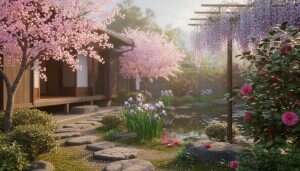
Japanese flowers have a quiet beauty that changes with the seasons, and they can make a garden feel calmer without doing anything complicated. Keep in mind that the Japanese variety of flowers is not limited to cherry blossoms. There are camellias, irises, and wisteria that brings the same inner peace present in Asian gardens.
For this guide, we list out the Japanese flowers you can cultivate at home. We also offer valuable home gardening tips.
Key Takeaways
Contents
- Japanese flowers have a calm, seasonal charm that can make a garden feel more peaceful without turning it into a high-maintenance project.
- Growing them at home is very doable as long as you pick plants that match your local weather and the amount of sun your space actually gets.
- You can also enjoy them indoors by cutting a few stems for a simple vase, or drying and pressing blooms so that bit of garden calm carries into everyday life.
Classic Japanese Perennials and Bulbs
Japanese perennials and bulbs have a way of making a garden feel settled and intentional. They come back year after year, filling the same spots like familiar landmarks. A lot of them also carry cultural meaning in Japan, so you’re not just planting something pretty, you’re adding a plant with a story behind it.
Japanese Irises (Ayame / Hanashōbu)
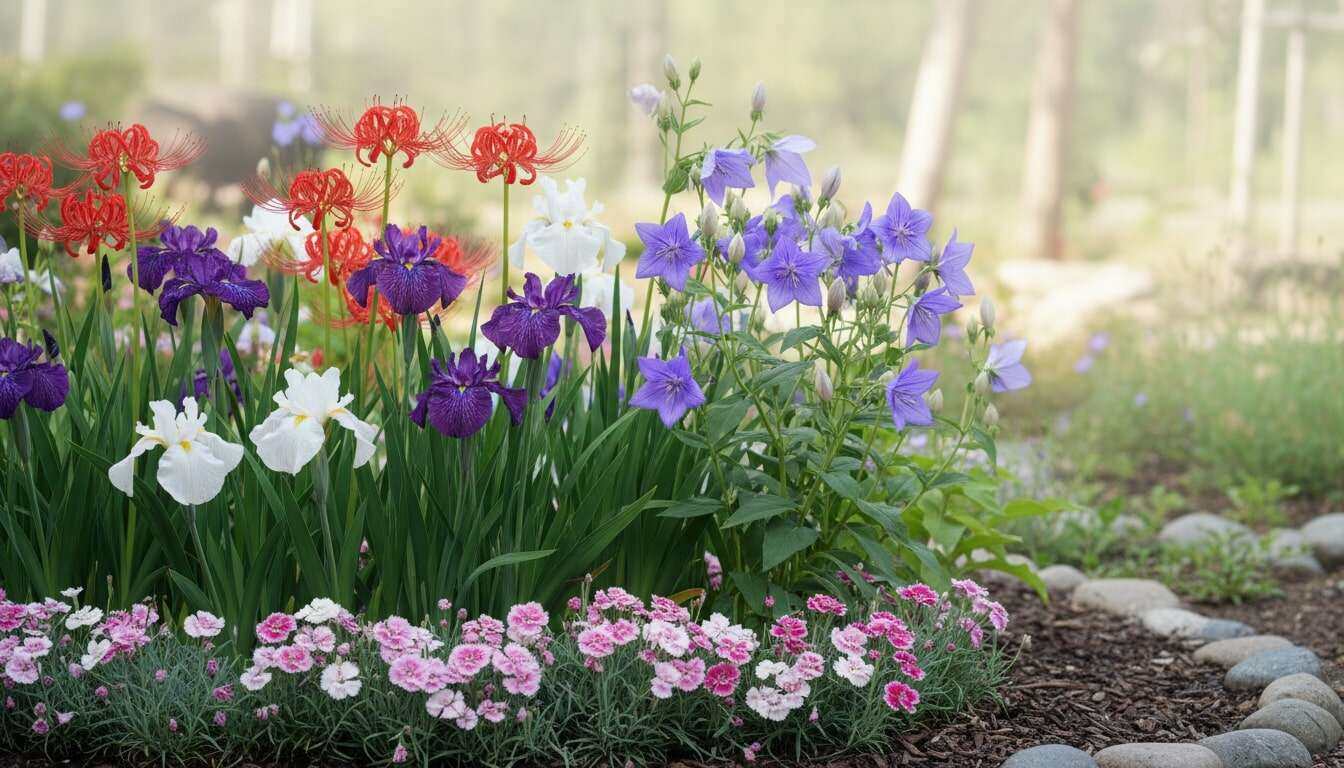
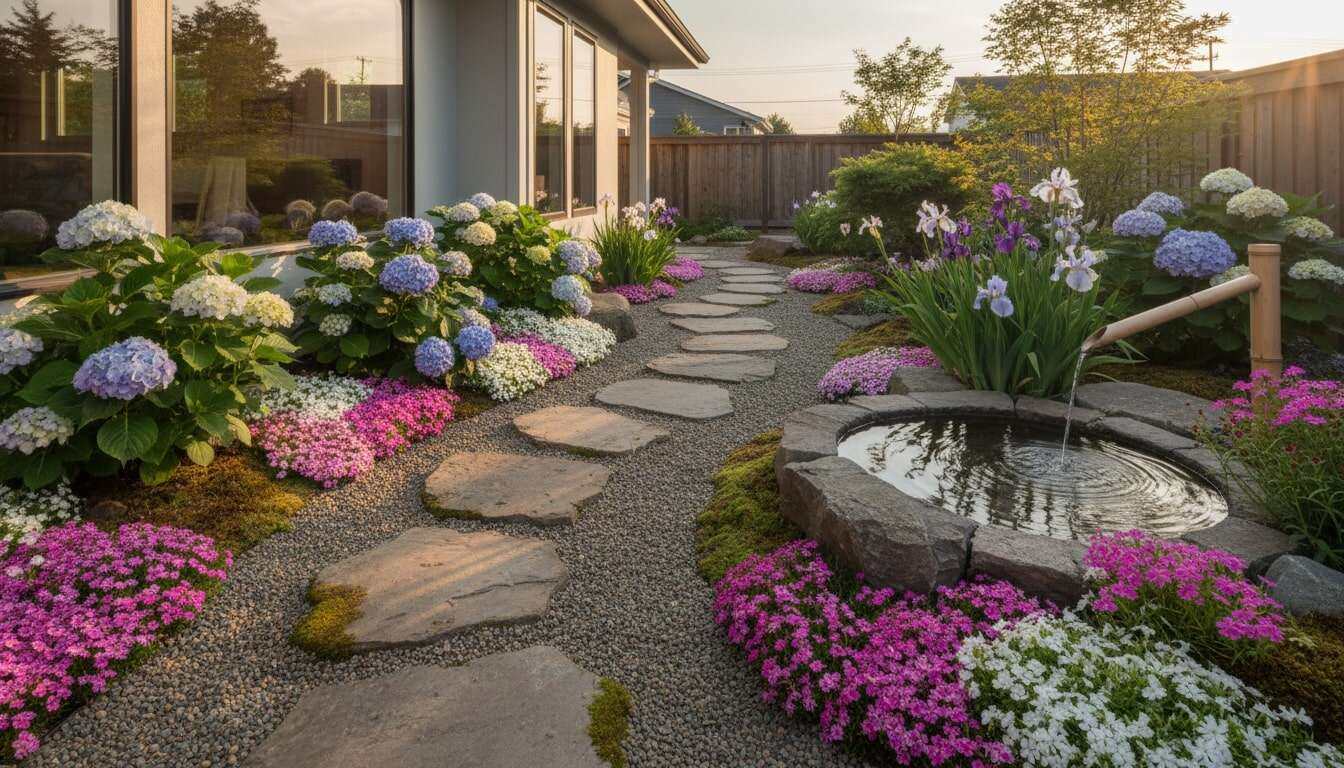
Japanese irises are known for big, wide petals that look almost painted on. When they bloom, they bring that soft, “water garden” feeling even if you don’t have a pond. They look especially good near water features, along damp edges, or in a bed where the flowers can stand out against plain green leaves.
Most varieties show up in purples, blues, and whites, and they tend to peak in early summer. If you want one plant that can make a corner feel more refined without adding clutter, this is an easy pick.
Red Spider Lily (Higanbana)
Red spider lilies show up late in the season, and they don’t ease into it. One week there’s nothing, then suddenly you get these bright red blooms on bare stems, almost like little fireworks hovering above the ground. The shape is unusual too, with thin petals and long stamens that give it a slightly wild, mysterious look.
In Japan, they’re tied to seasonal shifts and moments of transition, which is part of their appeal. Even if you’re not planting for symbolism, they’re great for turning a forgotten patch of soil into a spot people notice right away.
Balloon Flower (Kikyō)
Balloon flower buds are the fun part. Before they open, they swell up like tiny balloons, then pop into neat, star-shaped flowers. The color is usually a violet-blue that looks clean and calm against green foliage, though white varieties are common too.
Kikyō is often linked with honesty and lasting affection in Japanese tradition, which makes it a nice plant for areas you see every day, like near a doorway or beside a bench. It stays fairly tidy, so it adds color without taking over.
Fringed Pink (Nadeshiko)
Nadeshiko has petals that look like someone carefully snipped the edges with scissors, giving the flowers a soft, fringed look. The colors are usually gentle, mostly pinks and whites, and they feel a bit old-fashioned in the best way.
The name carries a lot of cultural weight in Japan, tied to an ideal of gentle beauty. In a home garden, it works as a low plant that softens borders, edges paths, and fills small gaps with light, airy color instead of big, heavy blooms.
Small Japanese Flowers for Containers and Borders
Smaller Japanese flowers really shine when they’re close to where you sit, walk, or pass by every day. In pots and along border edges, you notice the little things, like petal shape, leaf texture, and how the colors shift as the season changes. They’re compact plants, but they still make a space feel thoughtful and pulled together.
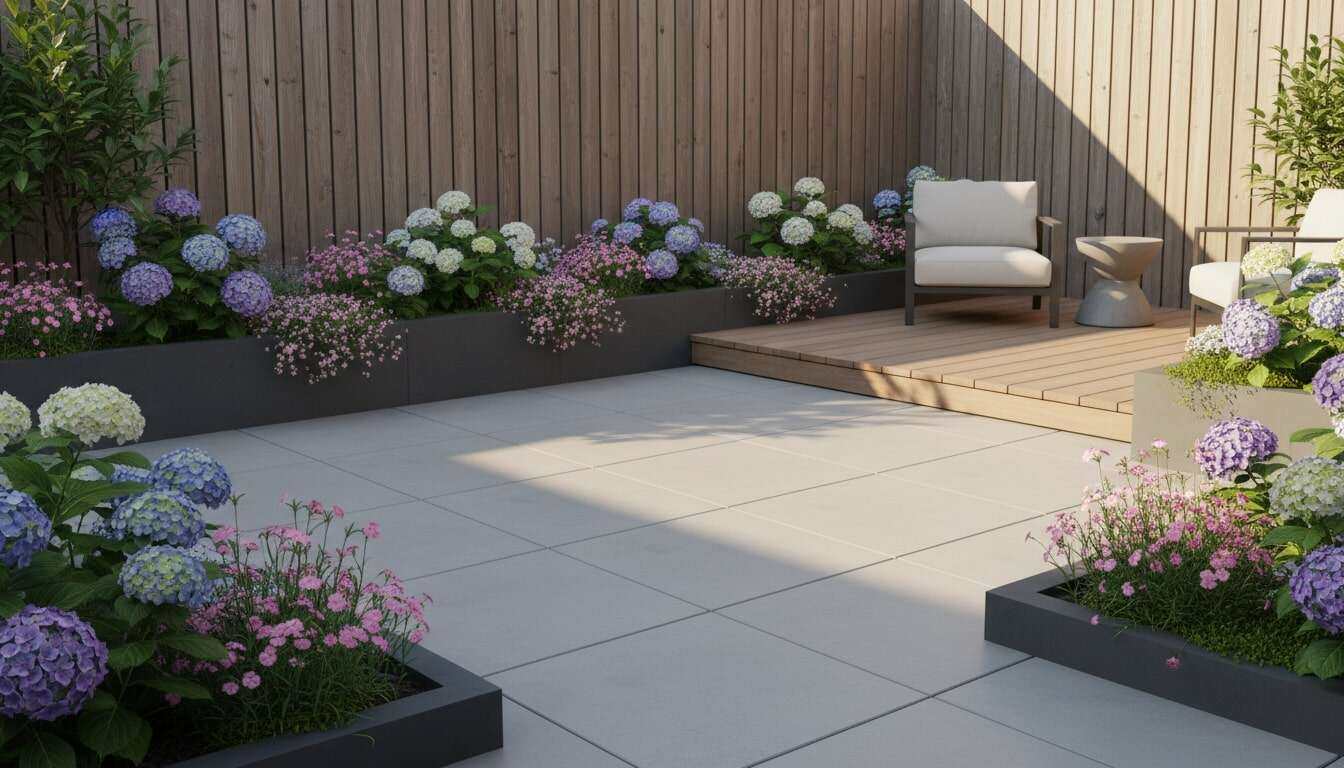
Ajisai hydrangeas are popular for a reason. Those round flower clusters look full and lush, almost like a ready-made arrangement sitting on the plant. In containers, compact varieties work especially well because they stay manageable and still give you that big “wow” bloom.
One of the best parts is the color change. Depending on the soil and the variety, you’ll see blues, purples, and pinks, sometimes all on the same plant. They also have that cool, rainy-season vibe that feels calm and a little nostalgic, which makes them great near entryways, patios, or a quiet seating spot.
Moss Phlox (Shibazakura)
Shibazakura is the plant you use when you want a border to look finished. It spreads low and tight, then covers itself in small star-shaped flowers so the whole patch turns into a carpet of color. The foliage stays in the background, so what you really see is a dense layer of pinks, whites, and magentas.
In Japan, you’ll see it used on slopes like a wide sweep of color. At home, you can get the same effect on a smaller scale. It’s perfect for the front of a bed, along a path, or spilling slightly over the edge of a container.
Japanese Bellflower (Tsuriganeso)
Tsuriganeso has a softer look than showy garden flowers, and that’s exactly why it works. The blooms hang like little bells, and they move gently when the breeze hits them. In a pot or a narrow border, that bit of motion makes the planting feel more alive and relaxed.
The flowers are usually blue to lilac, and they pair well with greenery that has a woodland feel, like ferns or shade-loving groundcovers. If you like plants that don’t shout but still have personality up close, this one fits the mood.
Essential Growing Conditions for Japanese Flowers
Japanese flowers tend to look their best when the basics are steady and not overdone. Light, soil, moisture, and feeding all work together. When those pieces are in balance, the plants grow with better shape, cleaner color, and more reliable blooms, and the whole space feels calmer and more natural.
Soil and Drainage for Japanese Flowers
Good soil doesn’t call attention to itself, but you’ll notice the difference in how the plants grow. Most Japanese flowers prefer soil that holds some moisture without staying soggy, and roots that can breathe instead of sitting in compacted dirt.
- Mix in organic matter to loosen the soil so it drains well but doesn’t dry out instantly
- Keep fertility in the “middle” range so plants stay sturdy instead of getting floppy and overly soft
- Water should soak in, not puddle, and the roots shouldn’t sit in wet pockets
- Improve soil slowly with compost, leaf mold, or other gentle amendments that build structure over time
Light and Temperature Needs of Japanese Flowers
Light is a big part of the mood in Japanese-style gardens. A lot of classic plants aren’t looking for harsh, all-day sun. They do better with morning light, afternoon shade, or filtered sun that shifts as the day moves.
- Full sun suits plants that naturally grow in open areas, like meadow-type flowers and many bulbs
- Use partial shade for thinner-petaled flowers and plants that scorch easily in midday heat
- Morning sun is usually kinder and helps dry leaves, while hot afternoon sun can stress plants faster
- Pay attention to how light changes by season, since a spot that’s shady in summer can be much brighter in winter
Water and Humidity Around Japanese Flowers
Many Japanese flowers like consistent moisture, but not the “always wet” kind. The goal is even hydration that supports growth and blooms without turning the soil into a swamp.
- Water deeply enough to reach the roots, then let the surface dry slightly before watering again
- Avoid big swings between bone-dry soil and soaking wet soil, since that stresses roots and can reduce flowering
- Pots and gravel areas dry out faster, while shaded beds hold water longer, so adjust based on where the plant sits
- After rain, check which areas stay wet the longest and treat them as “moisture zones” when deciding what to plant there
Nutrients and Long-Term Vigor of Japanese Flowers
These plants usually don’t look better when you push them hard with fertilizer. You get more leaves, weaker stems, and fewer flowers. A lighter hand keeps growth tidy and helps the plant hold its natural form.
- Use slow, gentle feeding like compost, well-rotted manure, or balanced slow-release fertilizer
- Aim for steady growth instead of rapid size, especially with flowering shrubs and perennials
- Watch the leaves and bloom quality since they’ll tell you more than a strict feeding schedule will
- Adjust year by year based on what you see, since a plant that’s settled in often needs less help than a newly planted one
Bringing Japanese Flowers Indoors
Japanese flowers don’t need to stay in the garden. A few stems on a table or a branch in a simple vase can bring that seasonal feeling into the house, even on regular weekdays. It’s less about decorating and more about noticing what’s blooming right now, then letting it quietly shape the mood of a room.
Cutting Garden Ideas for Japanese Flowers
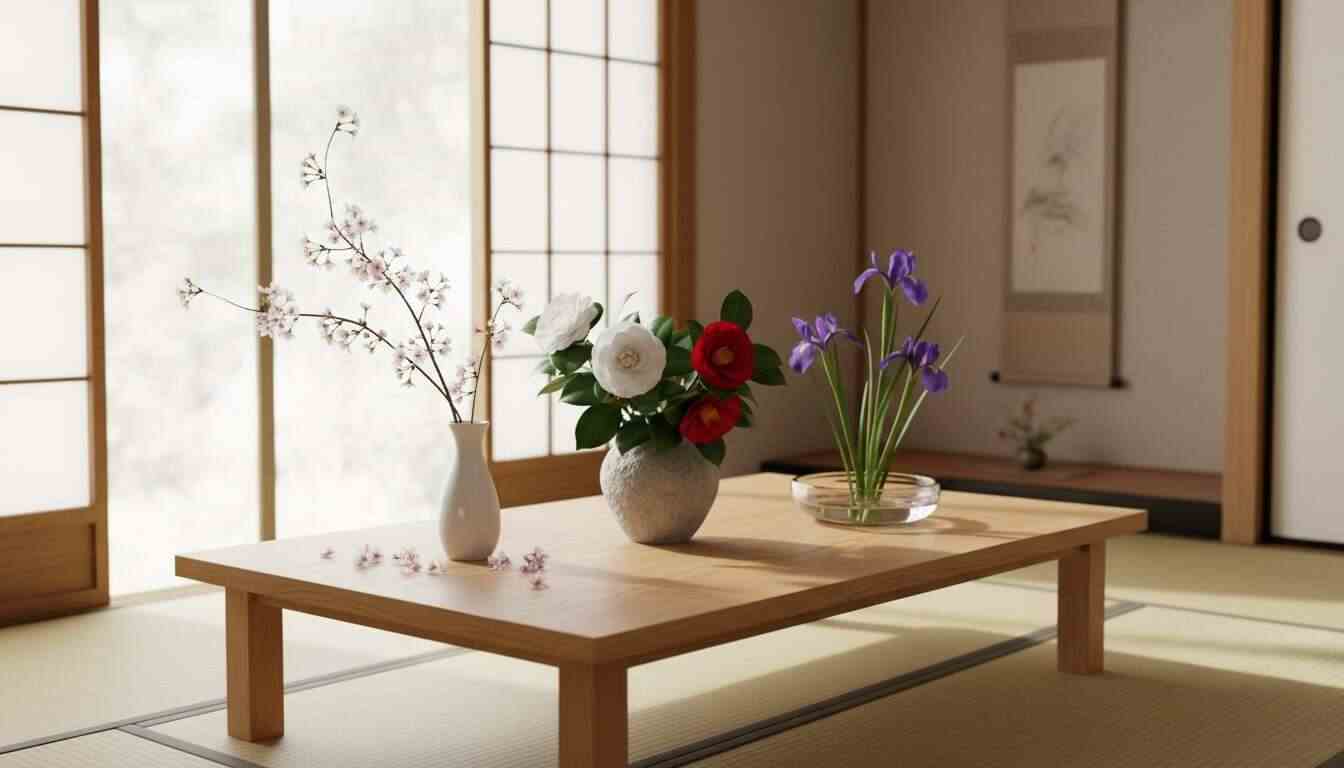
If you grow a few Japanese favorites with cutting in mind, you’ll always have something to bring inside. Cherry blossoms, camellias, and irises all look natural indoors, and they don’t need fancy styling to feel special.
A lot of gardeners cut in the morning because the stems are fuller and the blooms last longer. Picking what to cut is part of the enjoyment. One stem can feel calm and spare, while a handful of blooms can make a room feel softer and more lived-in. A vase on the kitchen counter or near your desk is often enough.
Simple Ikebana-Style Arrangements
Ikebana is about shape and spacing, not piling flowers into a container. You don’t need training to borrow that approach. Start with a small number of stems and pay attention to the line they make, the direction they lean, and the empty space around them.
What you leave out matters. A single iris, a curved twig, or a few camellia blooms can look more striking than a packed bouquet. It turns the arrangement into something you look at slowly, almost like a small sculpture that happens to be alive.
Forcing Branches and Bulbs Indoors
Forcing is basically bringing spring inside early. In late winter, you can cut branches like cherry, plum, or quince, then place them in water indoors and wait for the buds to open. It’s one of those small things that feels surprisingly uplifting when everything outside still looks dormant.
Some bulbs can also bloom early in pots near a bright window. Watching buds swell and open indoors is a quiet kind of excitement, especially if you’re craving that first sign that the season is changing.
Drying and Preserving Japanese Flowers
Drying flowers is a good way to stretch the season a little longer. Hydrangeas are a classic because they hold their shape well, and other small blooms can dry nicely if you hang them somewhere cool and dark.
Pressing petals is another simple option. Cherry blossom or camellia petals can be pressed and used for bookmarks, cards, or framed pieces. It’s a practical way to keep a small reminder of what bloomed in your garden, even after the plant has moved on to the next season.
Conclusion
Japanese flowers have a way of feeling special without being flashy. You get elegance, a bit of meaning behind the blooms, and that seasonal “wow” when something suddenly opens up or changes color. If you pick varieties that actually fit your climate and the light you have, the garden starts to feel personal pretty quickly, not like you’re copying a look you saw online.
They also make you pay attention. Buds swell, petals drop, colors shift, and you notice the seasons in a more everyday, quiet way. Even a single branch in a vase or a small pot on a balcony can turn an ordinary day into a moment that feels calmer.
FAQ: Growing Japanese Flowers at Home
- Are Japanese flowers difficult to grow for beginners?
- A lot of them are easier than people assume. Plants like nadeshiko, ajisai hydrangeas, and many iris varieties are fairly forgiving if you get the basics right. The real trick is choosing plants that match your light and temperatures instead of trying to force something that wants a different climate. Start small, then build from there.
- Can I grow Japanese flowers in containers on a small balcony?
- Yes, and containers are honestly a great way to enjoy them up close. Ajisai, nadeshiko, moss phlox, and other compact plants do well in pots as long as drainage is solid and you’re consistent with watering. Grouping a few containers together can create a “mini garden” feel without needing much space at all.
- Do Japanese flowers need a specific type of soil?
- Most prefer soil that drains well but still holds some moisture, so roots don’t sit in water and don’t dry out too fast either. Many are happy in moderately fertile soil, and adding compost usually helps. Some plants lean toward slightly acidic soil, but you don’t need to chase perfect pH. Watch leaf color and growth to guide small adjustments.
- Will Japanese flowers survive cold winters in my region?
- It depends on the plant. Some handle cold well, like many irises and plenty of hydrangeas, while others are more sensitive, like certain camellias. Check the hardiness rating before buying, then use simple protection if needed, such as a layer of mulch, a sheltered spot near a wall, or wind protection during the harshest weeks.