Basement flooring is one of those choices that quietly shapes how the whole space feels and holds up over time. Since basements deal with moisture, cooler temperatures, and plenty of wear, material is crucial. It needs to do more than just look good. The right floor helps manage dampness and mold problems. It also adds insulation underfoot to keep the space as comfortable as other spaces at home. Once you understand the main flooring options and what each one does well, it’s much easier to choose one that fits your basement.
Contents
Key Takeaways
- Prioritizing moisture-resistant and inorganic materials is essential for preventing mold growth and structural damage in below-grade environments.
- The ideal basement floor must balance durability for high-traffic activities with insulation and comfort to make the space feel like a natural extension of the home.
- Successful installation depends as much on invisible preparation, such as vapor barriers and subfloor leveling, as it does on the final flooring choice.
Popular Types of Basement Flooring
Picking basement flooring is really about matching the material to real-life basement conditions. Moisture, temperature swings, and how you plan to use the room matter more here than they do upstairs. Each option below has its own sweet spot, so the “best” choice depends on your space and your priorities.
Luxury Vinyl Plank and Tile
Luxury vinyl plank (LVP) and luxury vinyl tile (LVT) are popular for a reason. They handle moisture well, they look surprisingly close to wood or stone, and they’re usually simple to install. Most products are built in layers, with a waterproof core and a tough wear layer on top, so they hold up to daily traffic without needing much attention.
Many styles use click-lock edges, so they float over the subfloor and don’t demand a complicated install. That floating setup also helps in basements where humidity can change through the seasons.
Pros:
- Fully waterproof and basement-friendly
- Lots of convincing wood and stone looks
- DIY-friendly click-lock installation
- Slightly softer underfoot than tile
- Easy cleaning and low upkeep
Cons:
- Sharp objects and heavy impacts can gouge it
- Cheaper lines can show wear sooner
- Not the most eco-friendly option
- Some products may off-gas a bit at first
Engineered Hardwood
Engineered hardwood gives you real wood on the surface without being as fussy as solid hardwood. The construction is the key. A thin hardwood veneer is bonded over layered plywood or fiberboard, which helps reduce the expanding and shrinking that happens with moisture changes.
It’s not waterproof, but in a well-managed basement with a good moisture barrier, it can work nicely and add that warm, finished feel people want. Depending on the product, you may also be able to refinish it later, which helps it last longer.
Pros:
- Real wood look and texture
- More stable than solid hardwood
- Some products can be refinished
- Adds warmth and can help resale appeal
- Plenty of species and stain options
Cons:
- Standing water is a deal-breaker
- Costs more than many synthetic floors
- Needs moisture control and a proper barrier
- Can cup or warp in damp basements
- Install can be trickier than vinyl
Ceramic and Porcelain Tile
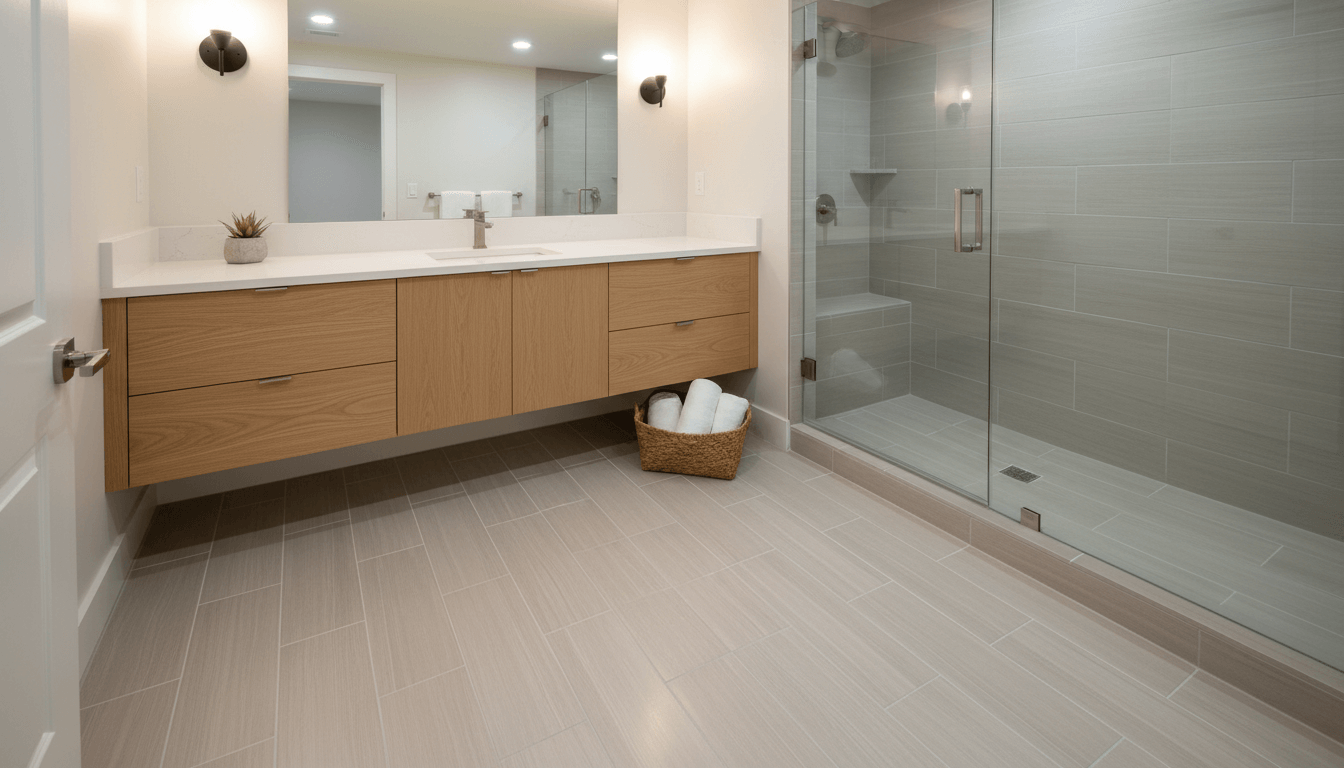
Tile is the heavy-duty option, especially porcelain. It’s dense, resists water, and doesn’t care about humidity the way wood-based materials do. If a basement tends to run damp or you’re worried about occasional water events, tile is hard to beat.
Design-wise, you can go almost any direction with sizes, finishes, and patterns. The tradeoff is comfort. Tile is cold and hard, so it feels best with radiant heat, area rugs, or spaces where softness isn’t the main goal.
Pros:
- Excellent water resistance
- Extremely durable and long-lasting
- Doesn’t support mold or mildew growth
- Easy to clean when installed properly
- Huge range of styles and layouts
Cons:
- Cold and hard underfoot
- Install is time-consuming and often professional
- Grout needs periodic cleaning and sealing
- Can crack if something heavy hits it just right
- Higher total cost once labor is included
Laminate Flooring
Laminate is often chosen because it’s budget-friendly and easy to install, while still giving a wood or stone look. It uses a photo layer under a wear layer, so it can look good at a glance and resist everyday scratches.
Basement-rated laminate has improved a lot, but it still isn’t truly waterproof. If moisture gets underneath or water sits on it for too long, it can swell and ruin the joints. It works best in basements that stay dry and stable, with good moisture control in place.
Pros:
- Lower cost than hardwood or tile
- Click-lock install is DIY-friendly
- Scratch-resistant and easy to maintain
- Lots of style choices
- Good value for moderate-use rooms
Cons:
- Not waterproof and can swell with water
- Can’t be refinished
- Sometimes sounds hollow when walked on
- Cheaper versions can look less realistic
- Typically doesn’t last as long as premium options
Carpet Tiles and Low-Pile Carpet
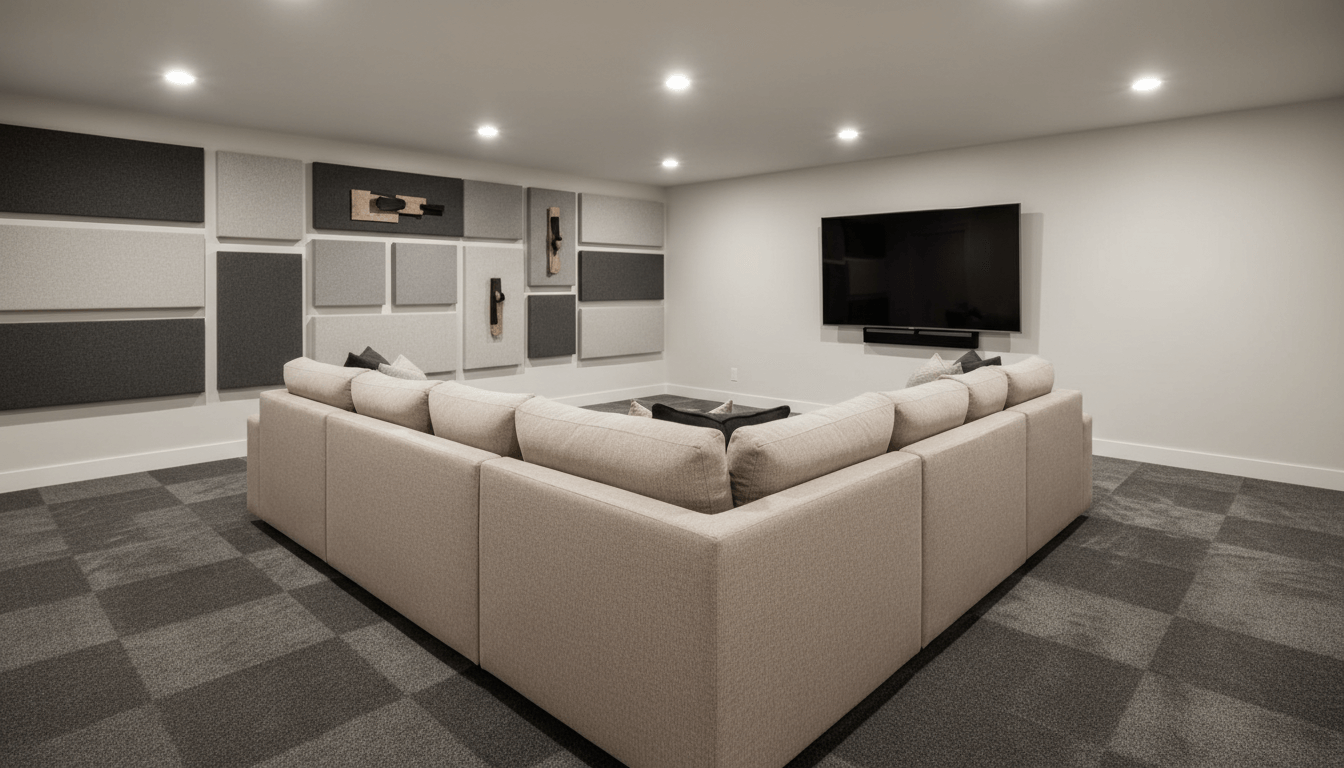
Carpet makes a basement feel warmer and more comfortable fast, especially for playrooms, media rooms, or a space where people sit on the floor. Carpet tiles are often the smarter basement version because you can replace just the damaged pieces instead of ripping out an entire room.
Low-pile styles also dry faster and hold less moisture than plush carpet. Still, carpet and moisture don’t mix well. If your basement has ongoing dampness or any flood risk, it’s usually better to pick something else.
Pros:
- Warm, soft, and comfortable
- Helps with sound control
- Carpet tiles are easy to swap out
- Often cost-effective for big areas
- Many colors and textures available
Cons:
- Higher risk of mold and odor if moisture is present
- Flooding can ruin it quickly
- Can hold allergens over time
- Shorter lifespan in damp conditions
- Not ideal if moisture problems aren’t solved
Epoxy and Concrete-Based Finishes
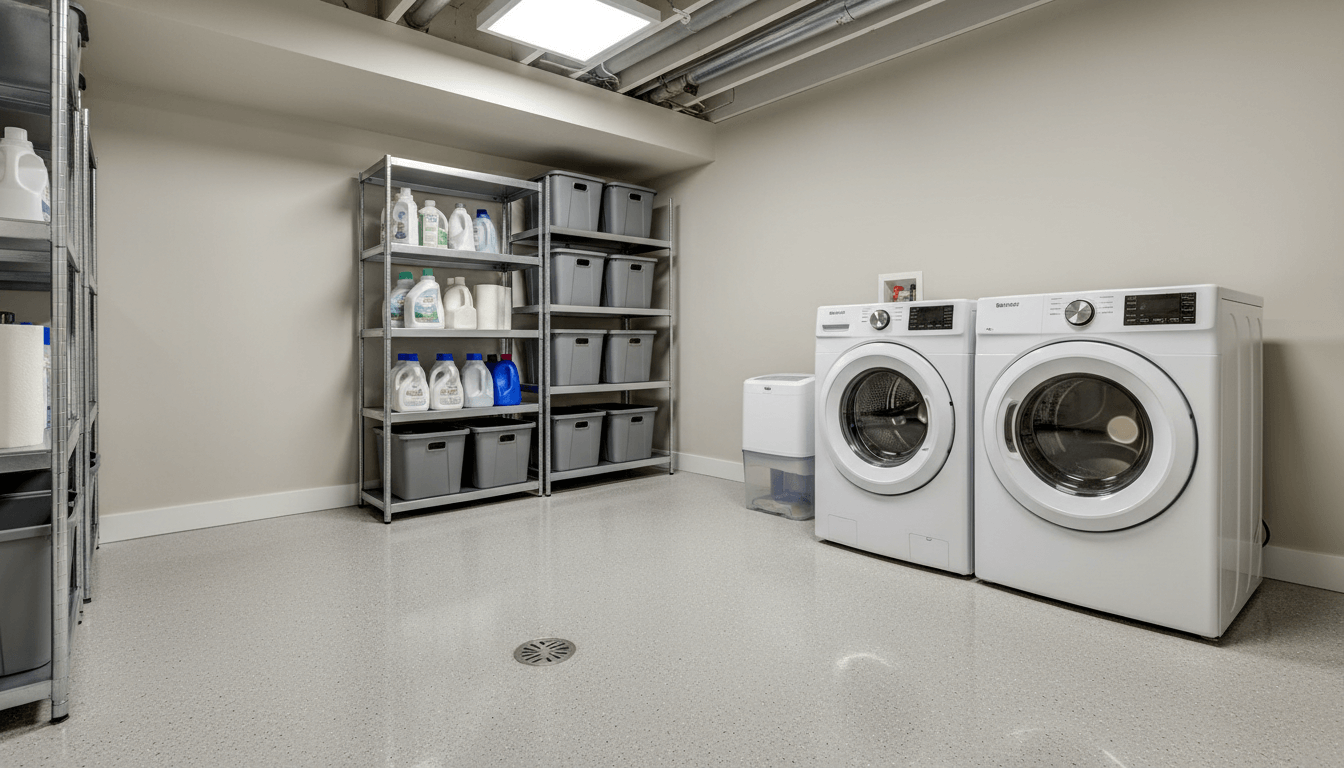
If you like a clean, modern look or you’re finishing a workshop or gym space, epoxy and polished concrete can make a lot of sense. Epoxy coatings create a seamless surface that bonds to concrete and resists moisture, stains, and wear.
Polished concrete uses the slab you already have, then grinds and treats it until it’s smooth and glossy. Both options are easy to clean and don’t have seams where grime and moisture collect. Comfort is the downside again. These floors are hard and can feel cold unless you add rugs or heating.
Pros:
- Seamless and highly moisture-resistant
- Tough, durable surface
- Minimal maintenance
- Can be cost-effective over an existing slab
- Great fit for modern or industrial styles
Cons:
- Hard and cold underfoot
- Can get slippery when wet if not textured
- Best results usually require pros
- Less “cozy” than other floors
- Not easy to change later
Key Factors to Consider Before Choosing Basement Flooring
Basements aren’t like the rest of the house. They run cooler, deal with more humidity, and can surprise you with moisture even when everything looks “dry.” Taking a minute to size up your conditions and how you’ll use the space makes it much easier to pick flooring that lasts and still feels comfortable.
Moisture Resistance and Vapor Control
Moisture is the make-or-break issue in most basements. Below-grade spaces can deal with groundwater seepage, humid air, and condensation on the slab, especially when seasons change.
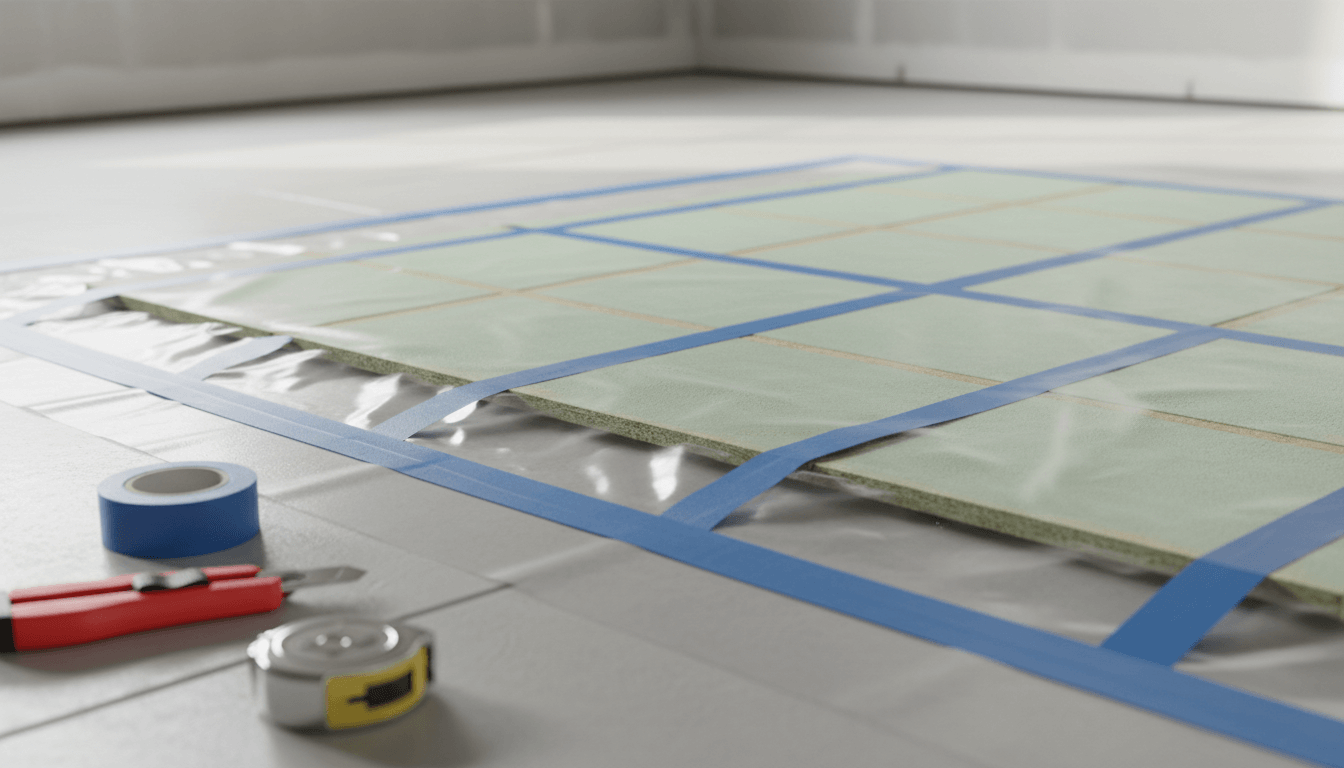
Your flooring needs to handle that without soaking it up, swelling, or coming loose. This is also where the “invisible” parts matter, like vapor barriers, underlayments, and a properly prepped subfloor. Even a basement that feels dry today can shift over time, so choosing moisture-tolerant materials helps prevent mold, warping, and adhesive failures while keeping the space healthier.
Durability and Wear Resistance
Basements tend to take a beating. People store heavy stuff down there, drag bins across the floor, set up gyms, move furniture around, and sometimes roll tools or equipment over the surface.
You want a floor that can handle impacts and abrasion without looking worn out after a year. Materials with a tough wear layer, a dense core, or a hardened finish usually hold up better in multipurpose spaces. If you expect regular traffic and activity, look for products rated for high-use areas so you’re not dealing with early repairs or replacement.
Comfort Underfoot and Insulation Value
A basement can feel chilly, so the floor you choose has a big effect on how inviting the room feels. Tile and bare concrete are durable, but they can feel cold and hard. Vinyl and carpet are softer and often feel warmer, even without extra heat.
Insulation matters too, especially if the basement is becoming a living area. Underlayment, cushioned backing, or radiant heat can make a huge difference, as long as you don’t create a setup that traps moisture. The goal is a floor that feels good to walk on without creating moisture problems later.
Maintenance and Long-Term Upkeep
Think about how much time you actually want to spend maintaining the floor. Some options are basically mop-and-go, while others need sealing, refinishing, or more careful cleaning. Basements usually do best with materials that resist stains and are easy to wipe down, especially if the space is used for storage, workouts, or entertaining.
It’s also worth considering repairs. Flooring that lets you replace a damaged section, like vinyl planks or carpet tiles, can save you a lot of frustration if something goes wrong.
Conclusion
Choosing basement flooring is a mix of style and practicality. You want something that looks good, but it also has to handle the reality of a below-grade space, like humidity, cooler temps, and the occasional moisture surprise. When you put moisture resistance and durability first, you protect your budget and avoid the common headaches like warped boards, lifting edges, or moldy odors. Carpet tiles can make a basement feel warmer and quieter, while luxury vinyl gives you a tough, water-friendly surface that still looks finished. If you prep the slab properly and pick a material that fits your conditions, your basement ends up feeling like a real extension of the home, not a compromise.
FAQ: Basement Flooring
- Can I install solid hardwood in a basement?
- Solid hardwood usually isn’t a good idea in a basement. Wood reacts strongly to moisture and temperature changes, so it tends to expand, shrink, cup, or gap over time. Engineered hardwood is more stable, and wood-look luxury vinyl gives you a similar look without the moisture risk.
- Do I always need a moisture barrier under basement flooring?
- Most of the time, yes. Concrete is porous and can release water vapor even when the surface looks dry. A vapor barrier or an underlayment with one built in helps stop moisture from getting into the flooring, which lowers the risk of mold, odors, and adhesives failing.
- What is the most budget-friendly basement flooring option?
- Laminate and basic peel-and-stick vinyl are often the cheapest upfront for big areas. Still, it’s smart to look at the full cost. Epoxy coatings or polished concrete can be great value because you’re using the existing slab, and you’re not buying a lot of extra material. Don’t forget to budget for underlayment and any subfloor repairs.
- How do I handle flooring if my basement occasionally leaks?
- Go with materials that don’t mind water, like ceramic or porcelain tile, luxury vinyl, or epoxy. These options won’t rot and they don’t support mold the way organic materials can. If leaks happen more than once in a while, a raised subfloor system or a floating setup can also help since it’s easier to remove sections and dry things out.
- Is radiant floor heating worth it for a basement?
- It can be, especially if you plan to use the basement as living space. Concrete stays cold, so radiant heat makes the room feel noticeably more comfortable in cooler months. Tile and stone are ideal on top of radiant systems, but plenty of modern luxury vinyl and laminate products also work as long as you follow the manufacturer’s limits.