
A dripping or dated faucet has a way of making the whole sink area feel worn out. The good news is replacing a kitchen faucet is usually very doable, even if you’re not the “plumbing type.” If you have a few basic tools, some patience, and you don’t mind working in a tight space under the sink, you can often finish the swap in a couple of hours.
This walkthrough covers the parts that actually matter: picking the right faucet for your sink, shutting the water off, removing the old hardware, installing the new one, and doing a proper leak check before you pack up. By the end, you’ll know how to replace kitchen faucet components safely and cleanly, without guessing your way through it.
Contents
Key Takeaways
- Replacing a kitchen faucet is usually a straightforward afternoon DIY job if you shut the water off, work slowly, and use the right tools.
- Fit comes first, so count your sink holes, check spacing, and grab a deck plate if you need to cover extras before you buy anything.
- Most leaks come from rushed connections or overtightening, so snug fittings gently and do a careful leak check with a flashlight.
- If you run into stuck shutoff valves, corroded lines, or signs of old water damage, pause and consider calling a plumber before it turns into a bigger repair.
How to Replace a Kitchen Faucet: Complete Step-by-Step Guide
Replacing a kitchen faucet is one of those upgrades that makes the whole sink area look cleaner and newer, even if you don’t touch anything else. It’s not a complicated job, but it does require patience, especially once you’re working in that cramped space under the sink. Plan on an afternoon, take it slow, and keep a towel handy because a little water always shows up.
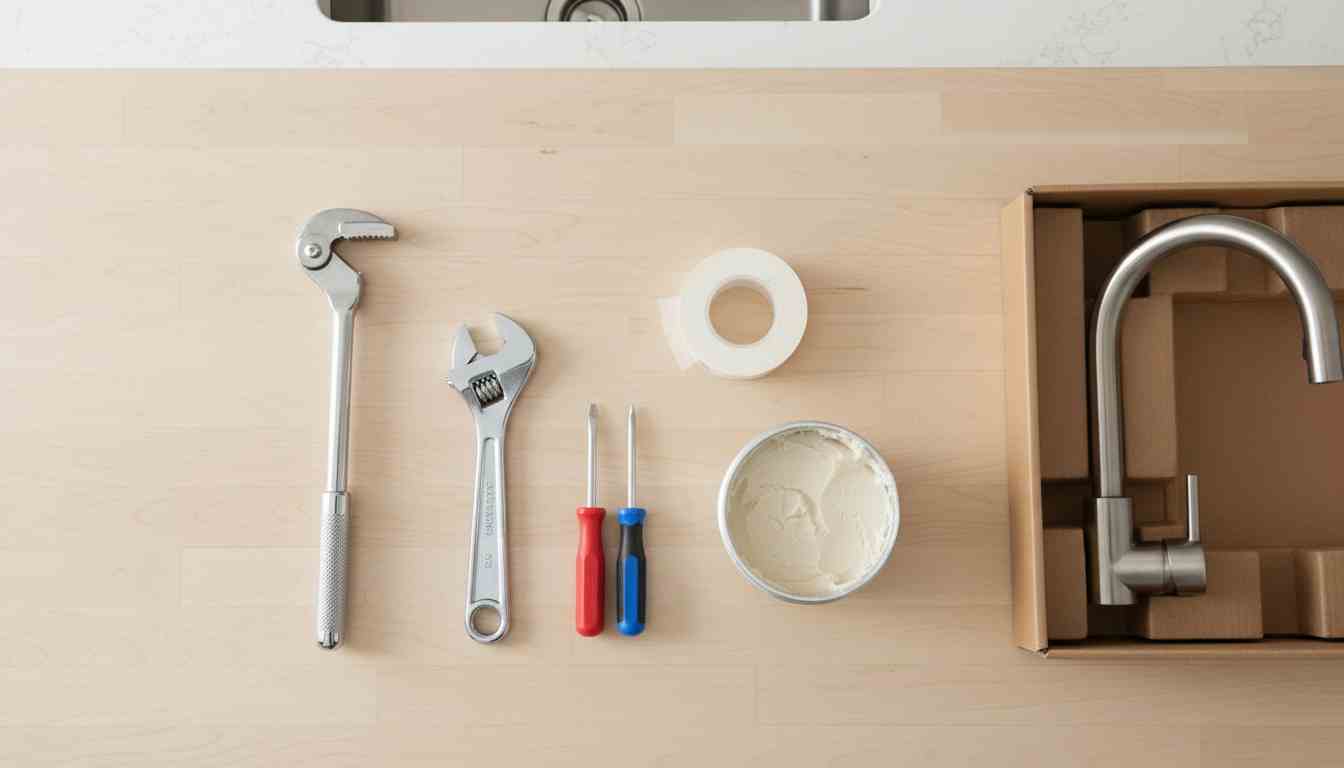
Tools
- Basin wrench
- Adjustable wrench or channel-lock pliers
- Flathead and Phillips screwdrivers
- Flashlight or headlamp so you can actually see what’s happening
- Bucket or large bowl for leftover water
- Towels or rags for drips and cabinet protection
- Utility knife or putty knife for scraping off old putty/caulk
Materials
- New kitchen faucet (with the included hardware and gaskets)
- Flexible supply lines (if the faucet doesn’t include them, or yours look worn)
- Plumber’s putty or silicone caulk (use what the manufacturer calls for)
- Teflon tape (only for the connections that need it)
- Penetrating oil (helpful if anything’s corroded and stubborn)
Step-by-Step Process Guide
- Step 1: Turn off the water supply
- Find the hot and cold shutoff valves under the sink and turn them clockwise until they stop. Turn on the old faucet to bleed off pressure and drain what’s left in the lines. Slide a bucket underneath because the moment you loosen anything, a little water usually drips out.
- Step 2: Disconnect the supply lines
- Use your wrench to loosen the nuts connecting the supply lines to the shutoff valves. Then disconnect the top ends where they attach to the faucet tailpieces. If you have a sprayer hose, disconnect that too, either at the faucet body or the tee connection depending on your setup.
- Step 3: Remove the old faucet
- This is the part that tests your patience. Crawl under the sink with your flashlight and locate the mounting nuts holding the faucet to the sink deck. Use the basin wrench to turn them counterclockwise. If they’re rusted or stuck, spray penetrating oil and let it sit a few minutes before trying again. Once the nuts and brackets come off, lift the old faucet straight up and out.
- Step 4: Clean the mounting surface
- Scrape away old putty, caulk, and mineral crust around the holes. A putty knife works well, just don’t gouge the sink surface. Wipe everything clean, then let it dry completely so the new faucet seals properly instead of sitting on grime.
- Step 5: Prep the new faucet
- Read the included instructions even if you’ve done this before, because brands love changing the order of parts. Install anything that needs to go on first, like the deck plate or gasket. If the faucet uses a gasket, set it in place. If it calls for putty or silicone, apply a thin, even bead where the base will sit.
- Step 6: Install the new faucet
- Feed the supply lines and sprayer hose down through the sink holes, then set the faucet in place. Take a second to line it up so it looks straight and sits flat. Under the sink, thread on the mounting nuts by hand first to avoid cross-threading. Tighten with the basin wrench, switching back and forth between nuts so the faucet pulls down evenly and doesn’t twist.
- Step 7: Connect the supply lines
- Attach the supply lines to the faucet tailpieces, hot to hot and cold to cold (hot is usually on the left). Start by hand, then snug them with a wrench. Don’t go overboard. Tight enough to seal is the goal. Connect the other ends to the shutoff valves. Use Teflon tape only if the fitting is a threaded style that calls for it, not on compression-style connections.
- Step 8: Connect the sprayer, if you have one
- Hook the sprayer hose up the way the manufacturer shows, then check the hose path under the sink. It should move freely without sharp bends or kinks. If it’s a pull-down faucet, attach the counterweight where the instructions specify so the head retracts smoothly instead of getting stuck.
- Step 9: Turn on the water and check for leaks
- Open the shutoff valves slowly while watching the connections under the sink. Run hot and cold water for about a minute to flush air and debris. Then do a careful leak check at every connection, including the sprayer hose and around the faucet base. If you see moisture, shut the water off, tighten the connection gently, and test again.
- Step 10: Final adjustments and cleanup
- Move the handle and swing the spout side to side to make sure everything feels solid but smooth. If you installed a deck plate and the manufacturer allows it, run a thin bead of silicone around the edge for a clean finish, then wipe away the excess. Clear out your tools, dry the cabinet area, and check once more for slow drips before you close the doors and call it done.

The Leak Check: Testing Your New Faucet Installation
Once everything’s hooked up and you turn the water back on, don’t rush to clean up yet. This is the point where a careful check can save you from finding a soggy cabinet floor a couple of weeks later.
- Open the shutoff valves slowly. Turn both valves counterclockwise a little at a time and keep your eyes on the connections as pressure builds. Leaks love to show up right when the lines first fill.
- Run hot and cold for a full minute. Turn on the faucet and let each side run to clear out air and any grit that might’ve gotten into the lines during the swap.
- Grab a flashlight and inspect every connection. Look at the shutoff valves, the supply line connections, the faucet tailpieces, and the area around the faucet base. Don’t assume “it looks fine” from a quick glance.
- Watch for beads, not just drips. A slow leak often starts as a tiny shine or a small bead of water on a thread. If you see that, it’s a real leak, just an early one.
- Test the sprayer like you mean it. Flip through every spray mode and, if you can, have someone else use the sprayer while you watch the hose connection. Some hoses only leak when water is actively moving through them.
- Check the top side too. Look around the faucet base on the sink deck. If water is seeping up from underneath, the gasket, putty, or mounting seal isn’t seated correctly.
- Fix leaks in small steps. If you spot moisture, shut the water back off, tighten the connection gently about a quarter turn, then test again. If it still leaks, stop tightening and re-check alignment, washers, or tape instead of forcing it.
- Do a second pass before you call it done. Let the water run another few minutes, then inspect everything again. Wipe everything dry so you’ll know if any new moisture shows up.
- Recheck later and the next day. Come back in a few hours, then once more the next day. Some leaks only appear after the lines heat up, cool down, and settle into place.
Avoiding Common Pitfalls When You Replace a Kitchen Faucet
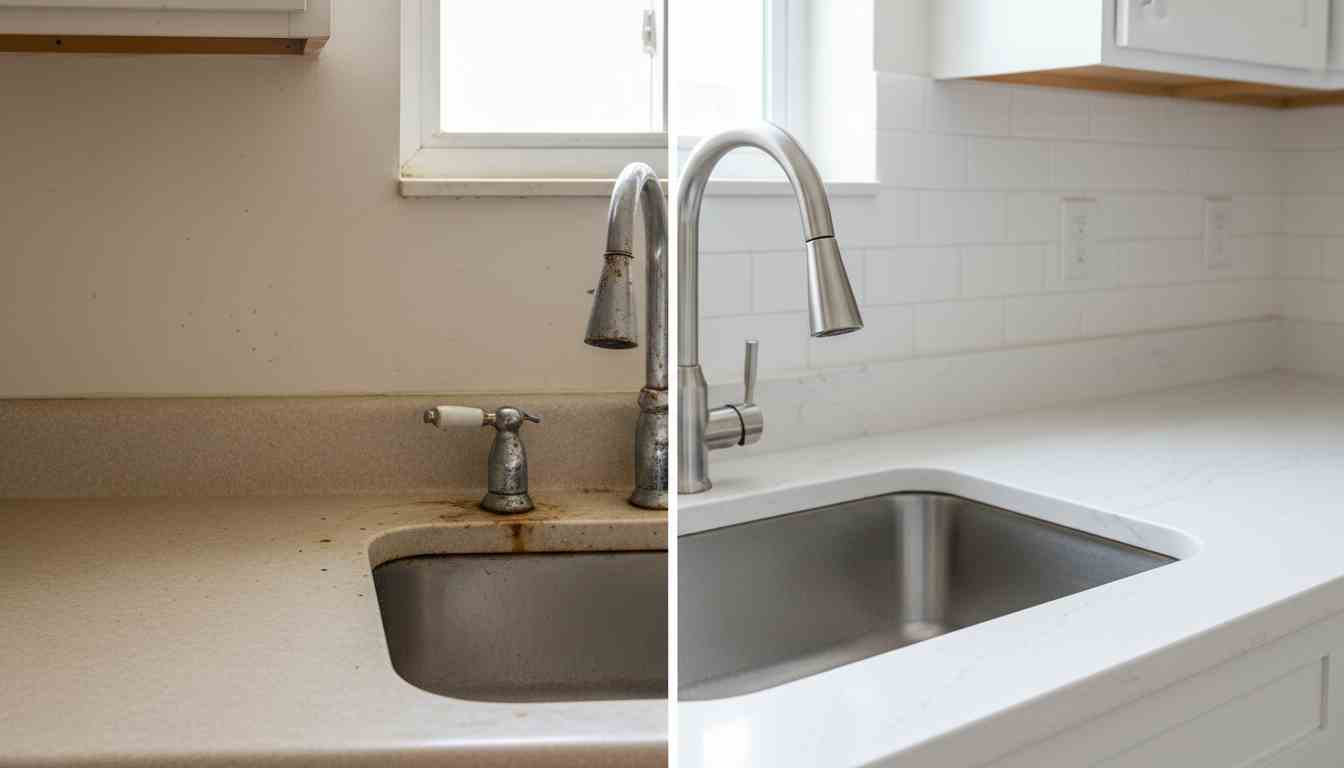
A kitchen faucet swap looks simple on paper, but it’s the kind of job that can turn annoying fast if you rush or assume everything under the sink will cooperate. Most problems come down to small oversights that lead to leaks, stripped parts, or a faucet that never quite sits right.
Measuring and matching before you buy
A lot of faucet “install problems” start at the store. Before you pick a style, count how many holes your sink has and measure the spacing if it’s a multi-hole setup. Also check the thickness of the countertop or sink deck where the faucet mounts, since some faucets have limits on what they’ll clamp down to.
If you have extra holes you’re not using, you’ll probably want a deck plate to cover them cleanly. Getting this right saves you the headache of drilling, improvising, or returning a pricey faucet that doesn’t match your layout.
Respecting water shutoffs and old plumbing
It’s easy to assume the shutoff valves under the sink will shut off like a light switch. In real life, older valves can be stiff, partially blocked, or they “close” but still let water sneak through.
Before you loosen anything, turn each valve slowly and test the faucet to confirm the water is actually off. If a valve won’t budge or starts dripping around the stem when you touch it, stop and plan on shutting off the main water supply. Pushing ahead when the shutoff is questionable is how people end up with water spraying into the cabinet mid-install.
Avoiding overtightening and damaged fittings
When you see moisture at a connection, your first instinct is usually to crank harder. That’s how plastic threads crack, rubber gaskets deform, and fittings get stripped. Tight should be snug, not brutal.
Hand tighten first, then use a wrench for a small additional turn, just enough to seat things firmly. If it still weeps, treat it like a setup issue, not a strength test. Re-check the washer or gasket position, make sure the line is threaded straight, and if you’re using threaded connections, confirm your tape or sealant is appropriate for that fitting.
Taking leak checks seriously, even for tiny drips
A “tiny” drip isn’t tiny when it happens for weeks inside a closed cabinet. It turns into swollen particle board, funky smells, and sometimes mold you don’t notice until it’s a real cleanup. After you install the faucet, run both hot and cold water and check every connection with a flashlight.
Dry the joints with a paper towel, then check again after a few minutes of running water. Come back later the same day and look again, because some slow leaks only show up after pressure and vibration have had time to work.

Knowing when to call a professional
Replacing a faucet is a reasonable DIY job, until it exposes bigger problems. If you find corroded supply lines, a shutoff valve that won’t fully close, brittle fittings, or signs that the cabinet has been leaking for a long time, it’s smart to pause.
If you’re feeling unsure or you can’t stop a leak without “guessing,” a licensed plumber can fix the underlying issue quickly and keep a simple upgrade from turning into water damage. You can also ask an expert if you can still fix the problem yourself.
Conclusion
Knowing how to replace kitchen faucet lets you save money and time. It comes down to removing the nuts connecting the old faucet and using newer one for the replacement. If you do the leak check properly and fix any small seep right away, you’ll end up with a faucet that works the way it should and a sink area that instantly looks newer.
FAQ: How to Replace a Kitchen Faucet
Can I replace a kitchen faucet without turning off the main water to the house?
Look for a shutoff valve connected to the main faucet. If there is one, it will stop the water flow to your sink, allowing you to replace the kitchen faucet with a new one. If there are none, you will need to shut off the entire main water line to your home before you can start the replacement.
Do I need plumber’s putty or is silicone enough for my new faucet?
Plumber putty is needed for older faucets that lack a rubber or foam gasket to stop leaks. There are also other brands that recommend the use of the putty. It is always best to check on the instructions of a newly bought faucet.
What if my old supply lines look rusty or frayed when I remove the faucet?
When you spot a corroded or cracked pipe, consider replacing it along with the faulty faucet. These pipes are likely to cause a leak in the near future. Fortunately, you can find replacement lines from the same shops you found your replacement faucets.
How do I know if my sink needs a single-handle or double-handle faucet?
Start by looking at your sink holes. Single-handle faucets usually need one hole, though many can use a deck plate to cover extra holes. Double-handle faucets almost always need three holes. If you’re sticking with the same style you already have, it’s usually a direct swap. If you’re changing styles, you might need a deck plate (escutcheon) or, in some cases, a different sink setup.
Is it normal for the water to sputter after installing a new faucet?
Air gets into the lines when you disconnect the plumbing, so the first run can spit and sputter or look a little cloudy. Let hot and cold run for a few minutes to clear it out. If the flow still seems weak, unscrew the aerator, rinse it, and test again. Sometimes a tiny bit of debris gets trapped there during the install.